
5 Ways to Turn Massage Website Visits into Bookings
Leanne has £60, two shoulders and a Thursday afternoon off. Your massage website needs to help her book one good Thursday, not sit a philosophy exam.
Published by the GROW Formula® team · Updated
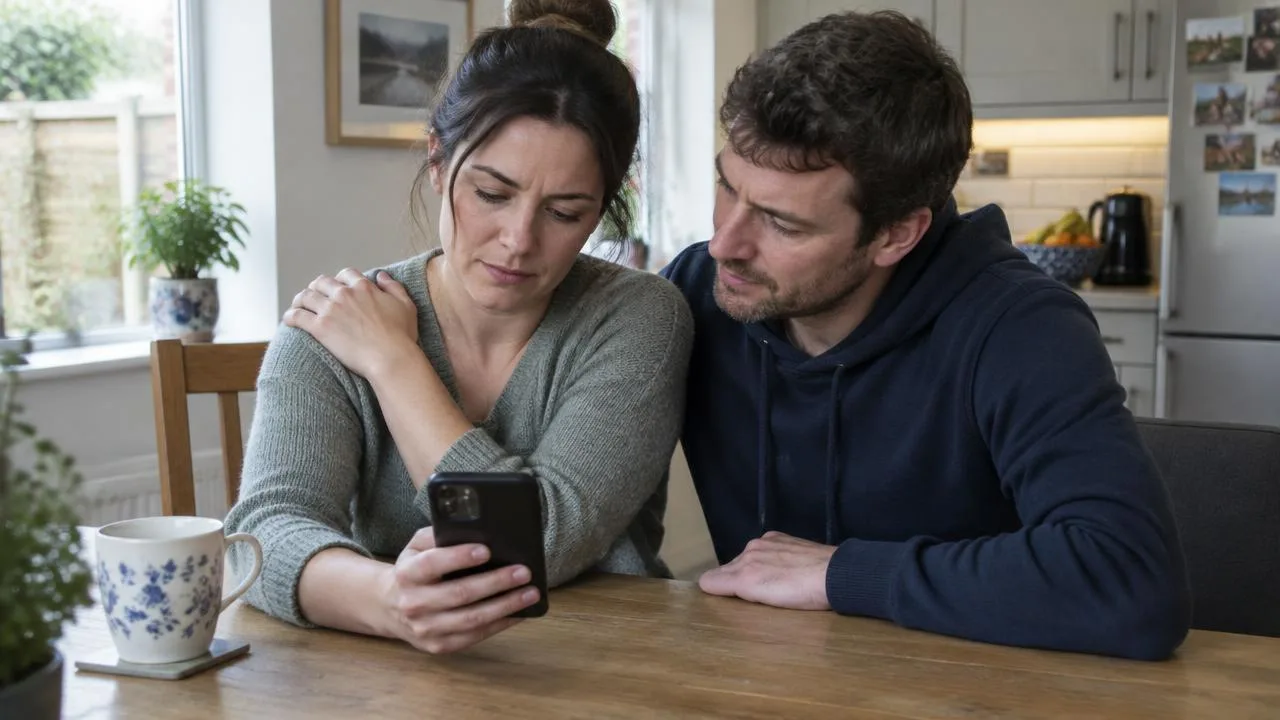
Leanne has £60, two shoulders and a Thursday afternoon off. This feels like enough information to book a massage.
On the first website she finds, she can choose Swedish, deep tissue, holistic, bespoke, therapeutic or signature. All six last an hour. Five feature the same photograph of a woman with a flower behind her ear. The sixth features the flower on its own, presumably between clients.
Leanne goes back to the top. She’d like someone to spend a bit of time on her shoulders. She likes fairly firm pressure. She would also, if at all possible, like to avoid making conversation while lying face down with her vowels coming out through a hole.
She sends the link to her partner. “Which would you pick?”
“The Thursday one.”
If you’re building a massage therapy website, here’s a useful distinction. You’ve learnt how to give six kinds of massage. Your prospective client is trying to buy one good Thursday. These five changes will help the two of you meet.
2. Show what it’s like to ask for something different
Leanne once spent twenty minutes having her left calf worked on because she’d said “lovely, thanks” at the beginning and felt it would be inconsistent to introduce new evidence. Plenty of people can negotiate a pay rise at work and still find it awkward to say “a bit lighter, please” to somebody holding their ankle.
Use your first-visit page to show how you make those conversations easy. Walk the reader through choosing areas, agreeing pressure, changing in privacy and staying covered. Write the words you’d actually say. For example:
Before you change, we’ll agree which areas you’d like me to work on and any you’d like me to leave out. I’ll explain how to get comfortable on the couch and give you privacy. Once we start, I’ll check how the pressure feels. You’re welcome to ask me to change it or stop at any time. If you’d enjoy a session without chat, just say. I’m very happy to let you have one.
Use that last sentence only if it’s true of you. Some practitioners are superb conversationalists. Some clients book them precisely because they want to find out what happened with the neighbour’s shed. A good massage website gives people a sense of whose room they’re entering.
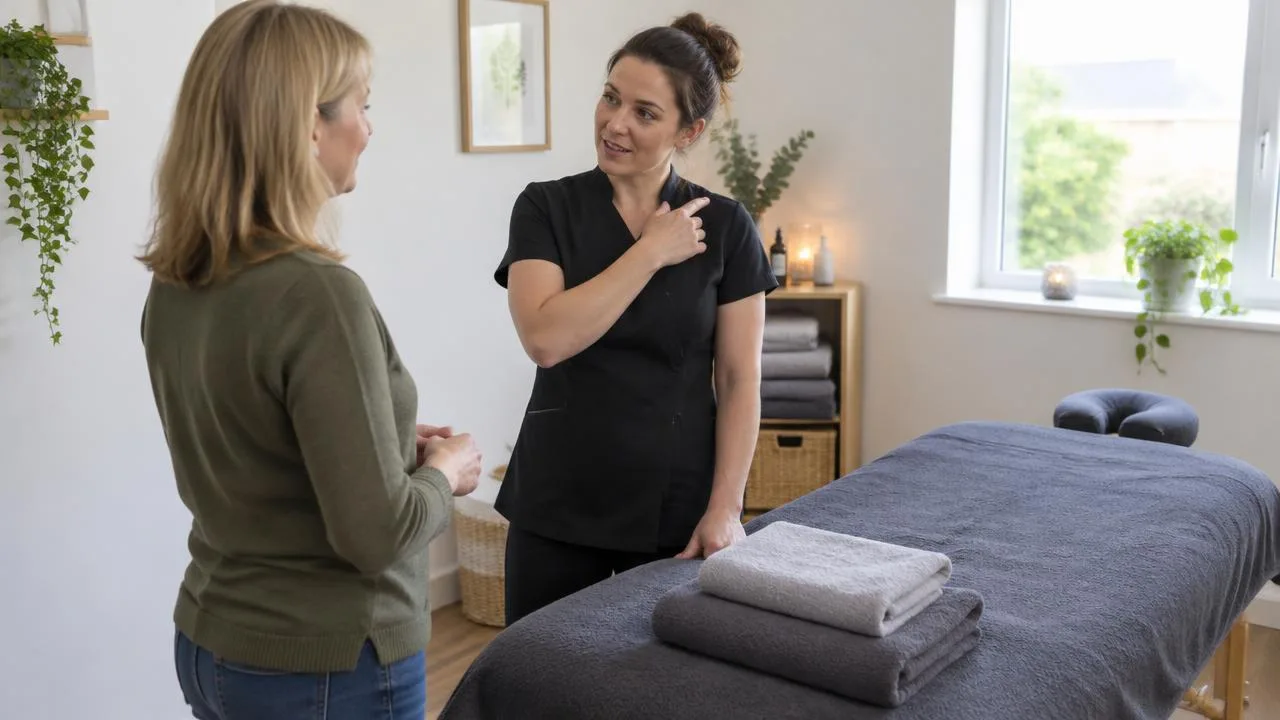
Your homepage can do some of this work too. Give your name, the town or neighbourhood where you practise, a recent photograph of you and one of the actual room. Add two or three details that matter to the people you see, such as step-free access, a height-adjustable couch or appointments after work. A reader can judge whether a specific detail helps them. It’s much harder to do that with the phrase “an oasis of tranquillity”, particularly if the oasis is upstairs.
3. Describe your skills in language you can stand behind
Leanne wants to know whether the therapist has the training to offer the session she’s chosen. A short bio with the name of your massage qualification, your relevant experience and your current professional memberships gives her something she can check. Link to a practitioner register entry if you have one. Use only the professional letters and logos you’re entitled to display.
When writing treatment descriptions, distinguish what you’ll do from the outcome someone hopes for. “We can spend most of the appointment on your back and shoulders, adjusting pressure as we go” makes a specific promise about the service. You can deliver it. “Permanently fixes the cause of your shoulder pain” makes a medical claim about a person you have yet to meet.
UK advertising guidance recognises wording about relaxation, a sense of wellbeing and relief of everyday stress. Stronger claims about treating medical conditions need appropriate evidence. Apply the same care to testimonials you publish with permission. Feedback about feeling listened to or being able to ask for lighter pressure can answer a prospective client’s question in its own right. CAP guidance on massage and bodywork
4. Let someone buy a massage without choosing it for somebody else
Halfway through booking her own session, Leanne remembers her mum’s birthday. Here’s a second visitor hiding inside the first one. This time she knows precisely how much she wants to spend and has absolutely no business deciding what happens to somebody else’s calves.
If you sell massage gift vouchers, give them their own plainly labelled page. A person buying a present has different questions from a person booking treatment. Can they choose an amount and let the recipient choose the massage? When does the voucher expire? Can the recipient pay the difference for a longer session? Will the email go to the buyer or straight to Mum at 11.43 on a Monday, thereby doing away with the need for a surprise on Saturday?
Spell out how redemption works. Put an I have a voucher link near the appointment choices if that’s how your booking system works. Try buying and redeeming a test voucher yourself. If the recipient has to enter their card details, explain why before they get there. A gift that apparently requires them to buy it again is a socially complicated thing to receive.
5. Test the booking journey with one thumb and a real diary
On a phone, start at the treatment page, as somebody arriving from a Google search or a friend’s link might. Give yourself Leanne’s brief: shoulders, £60, Thursday. Can you find the right appointment, see live availability and book at the advertised price? Does the confirmation give you the address, arrival time and any useful instructions about parking or access?
Keep a plainly labelled Book a massage button within reach on every page. Make sure the site loads quickly on mobile data. For anyone who needs to check something first, include a business email address, a mobile number and a short contact form with a realistic reply time. If you offer a free introductory call, say what it’s for and how long it lasts.
Then look at the names inside the booking calendar. It’s quite possible to spend a weekend rewriting your menu in beautiful plain English, only for the booking software to ask a paying member of the public to select STANDARD B 60 (NEW). You know what that means. The public have been through enough.
On Thursday, Leanne arrives for her forty-minute appointment. Her therapist asks where she’d like the focus and whether she fancies a session without chat. “Shoulders, please. And yes. Very much yes.”
Later, her partner asks which sort of massage she had.
“Back, neck and shoulders.”
“Was it good?”
“Lovely. I said seven words and meant all of them.”
Before putting more time or money into attracting massage clients, check that your fees and the number of paid appointments you need add up. Do the maths for your practice.
Once massage clients find you, what happens before, during and after their appointment matters too. Give great service in your practice.
More on be visible online
Where to go next
The same principle in other professions
Ideas often travel well between modalities.

3 Pages Your Craniosacral Therapy Website Actually Needs
June wants to know about trousers, Fridays and fifty pounds. Three useful pages can help your craniosacral therapy website answer the questions that matter.
5 Things to Put on Your Alexander Technique Homepage
Hilary’s choir folder has room for the music, but not for guessing what a lesson involves. Five homepage details can help new pupils take the next step.
4 Ways to Keep ‘Book Now’ in Sight on Your Yoga Website
Ruth has a lift, a free Tuesday and no yoga mat. Keep booking within reach at the moment your website answers a new student’s last question.
3 Reasons to Book Pilates That Belong on Your Website
Alice’s students chose her studio for an early introduction, six places and a booking they could move. Their answers can help your Pilates website earn its space.