
3 Reasons to Book Pilates That Belong on Your Website
Alice’s students chose her studio for an early introduction, six places and a booking they could move. Their answers can help your Pilates website earn its space.
Published by the GROW Formula® team · Updated
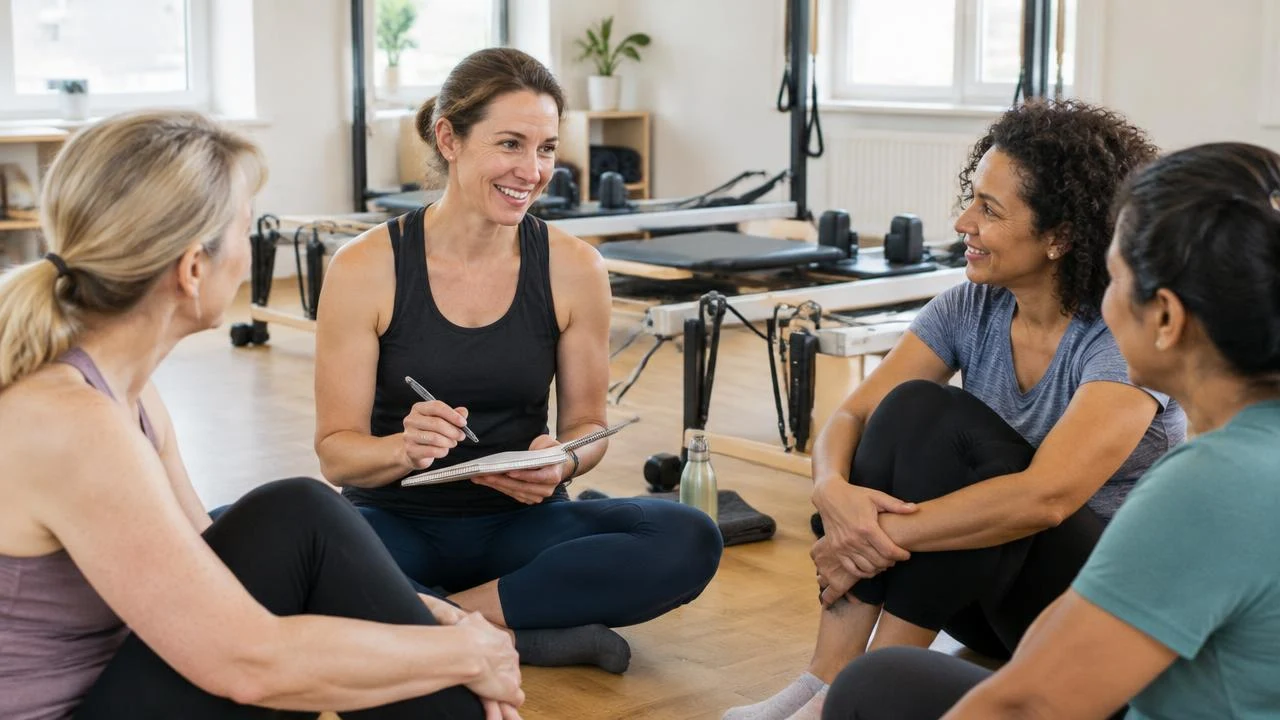
When Alice asks her Tuesday Pilates class why they chose her studio, she has a pen ready. After three years of training and a slightly alarming payment for the new studio floor, she’s rather hoping somebody mentions her teaching. She’d also accept the floor.
“You let me come in ten minutes early,” says Mo.
“There are only six of us,” says Farah.
“I can swap my Tuesday if my shift changes,” says Ian.
Alice looks down at her list of words for the new website. Precision. Energy. Community. She turns the piece of paper over.
“What did you want the ten minutes for, Mo?”
“To get on the thing while nobody was watching.”
The thing is a reformer. Mo is now perfectly happy using one. Before her first class, she’d seen a photograph of a sliding platform, a footbar and several straps, and had privately concluded that there were at least four ways to get on it and one of them would make a noise.
If you’re building a Pilates website, those ten minutes deserve more space than the floor. They solve a problem that nearly kept a paying student at home. In the GROW Formula, that’s a useful way to identify a unique selling point: look for something you do that removes a practical or emotional barrier for the people you most want to teach. Then choose the two or three that matter most. Here’s how Alice, our fictional teacher, turns hers into words a prospective student can act on.
1. “I can try the reformer before the rest of the class arrives”
Alice’s old homepage says Beginners welcome. So do the websites for the other studios Mo looked at. Mo believed every one of them. She also believed it was entirely possible to be warmly welcomed and still climb onto a piece of equipment backwards in front of six strangers.
What won her over was something Alice mentioned in passing on the phone. She’d show Mo around before the others arrived. Mo could ask what moved, where to put her feet and whether the straps were meant for her. That last question had been occupying quite a lot of her afternoon.
If that’s what you offer, put it where a new student chooses a class. For example:
First time on a reformer? Book Tuesday Beginners and come ten minutes early. I’ll meet you at the studio, show you how the carriage moves and help you get settled before the group arrives. The introduction is included in your class fee.
That last sentence saves a second enquiry. So does putting the arrival time in the confirmation email. If the class starts at 6.30, write “For your first visit, please arrive at 6.20.” Show where to enter and who will meet them. Make sure those ten minutes are genuinely free in your timetable. It’s difficult to give somebody an unhurried introduction while the previous class are wiping down the equipment and looking for a missing earring.
For a mat Pilates teacher, the same principle might produce quite different copy. Perhaps newcomers can see a minute of an actual beginner class before booking, or meet you at the village hall door to choose a spot where they can see your demonstrations. Start with whatever removes hesitation for your students.
2. “There are six places, and I know what that means for me”
Farah had tried a bigger class. The teacher was good. The trouble was that when Farah lost the sequence, she followed the woman next to her, who turned out to be following Farah. For several minutes they ran an entirely independent Pilates class.
So when Alice writes small group teaching, Farah wants to know how small. Six? Twelve? Small compared with the seating capacity of the Birmingham NEC?
Put a number to it, then explain why that number matters in your room:
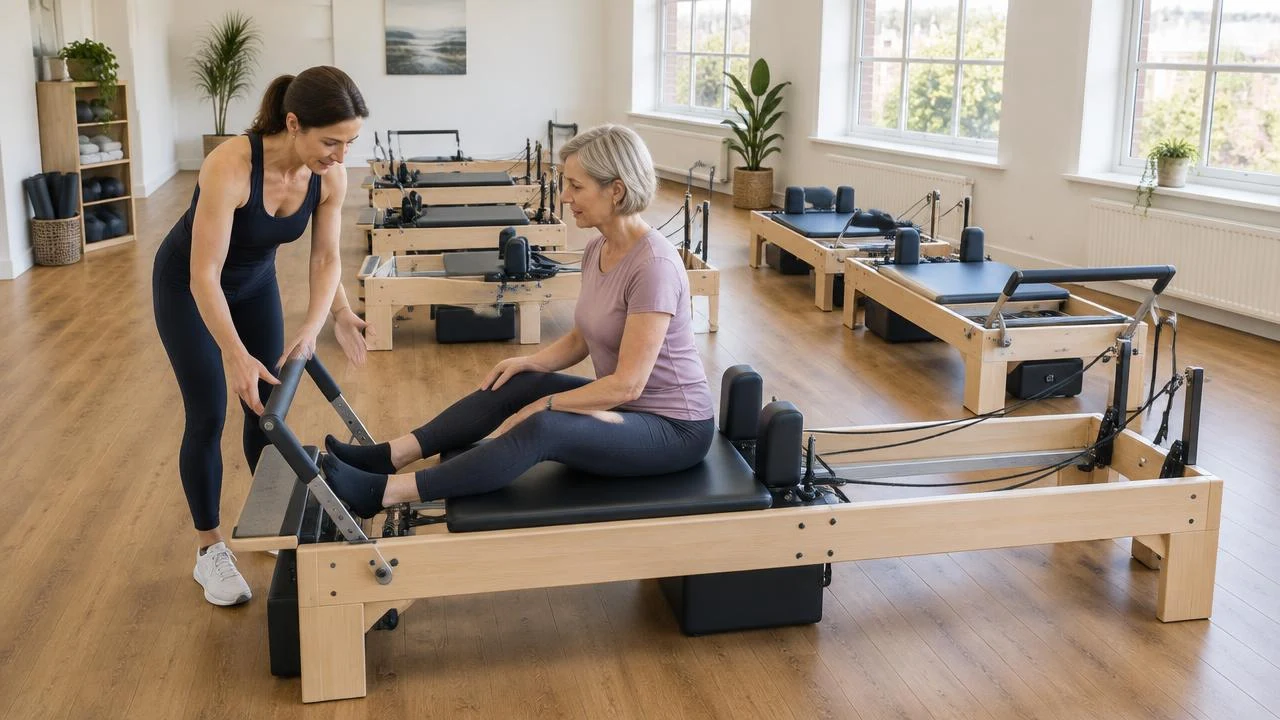
Six reformers. Six places. I demonstrate the setup before each new sequence and come round the group while you practise. If you lose track, you can ask me to show you again.
A photograph of the whole studio backs that up. Let the visitor see the six reformers and the space between them. A close-up of someone’s beautifully pointed foot may give the page a certain elegance, but as evidence about class size it establishes only that at least one person attended.
This is also where local research earns its keep. Look at a handful of nearby Pilates websites through Farah’s eyes. Can she tell how many people are in a class? What sort of help can she expect? If every local studio already explains its six-person limit, mention yours as useful class information and give the most prominent space to a difference that would actually influence her choice. A feature can be worth explaining without being the headline.
3. “I can still use the class I paid for if my rota changes”
Ian used to visit Alice’s website every Sunday night. He’d see a space on Tuesday, think about his shift pattern and close the tab. Alice assumed his eventual booking meant he’d finally found the motivation. Ian had been motivated for months. What he’d finally found was paragraph seven of her cancellation policy.
Alice lets students move a booking to another available class up to 24 hours beforehand. For someone working fixed hours, that’s mildly interesting. For Ian, it’s the difference between paying £18 for Pilates and paying £18 for an email reminding him he’s missing Pilates.
If you offer flexibility, describe the particular flexibility you can honour. Put it beside the price, before somebody pays:
Tuesday Beginners · 6.30 to 7.20pm · £18 per class. If your plans change, you can move your booking to another class with space up to 24 hours before the start. Use the link in your confirmation email.
These are illustrative terms and prices. Yours may be different. A fixed six-week course might be exactly what your students value, because they keep the same place with the same teacher and group. In that case, publish the full cost, dates and arrangements for a missed week. Let the person whose life fits that offer recognise it.
Where to put your strongest selling points
Alice’s new homepage opens with Beginner reformer Pilates in Derby, followed by one short invitation:
Come ten minutes early for a first-visit introduction, then learn with a regular group of up to six. Tuesday evenings are £18 per class, with the option to move your booking up to 24 hours ahead if another class has space. Book a beginner class.
Underneath is a genuine photo of Alice teaching, a short bio with her relevant qualifications and a link to first-visit details. The booking button stays visible as the reader scrolls. Someone who needs to ask a question can find her email, mobile number and contact form. There’s room for all of that once Precision. Energy. Community. have been relieved of the considerable responsibility of selling Tuesday night.
Try Alice’s exercise after your next class. Ask a few students, individually, “Was there anything that nearly stopped you booking, and what helped you decide?” The second half matters. I felt nervous is useful to know. You sent me a picture of the entrance so I knew I wouldn’t walk into the advanced class gives you something to put on the page.
Look for the two or three answers that recur, matter to the people you want to teach and describe something you reliably provide. Put the short version on the homepage and the practical detail beside the class it applies to. Then give your phone to somebody who’s never been and ask which class they’d pick and why. Their answer will tell you which parts of the website are earning their space.
At the end of Tuesday’s class, Mo pauses at the studio door. “Do you know,” she says, “I nearly didn’t come because I thought I had to be good at it first.”
Alice writes that down too.
“Lovely floor, by the way.”
She underlines that one. Purely for herself.
Before putting more time or money into attracting Pilates clients, check that your fees and the number of paid appointments you need add up. Do the maths for your practice.
Once Pilates clients find you, what happens before, during and after their appointment matters too. Give great service in your practice.
Where to go next
The same principle in other professions
Ideas often travel well between modalities.
SEO for Counsellors: 5 Ways to Get Found Without Asking Clients for Reviews
You can’t put a review QR code on the consulting room door. SEO for counsellors is about making the words you publish meet the question a client is willing to type.

SEO for Coaches: 5 Ways to Get Found by People Who Need Your Help
SEO for coaches starts with the gap between what you call your work and what a prospective client calls their Tuesday. Here are five ways to close it.

SEO for Acupuncturists: 5 Ways to Get Found by Local Patients
Getting found on Google was supposed to be the difficult bit. The harder job is making the words a patient searches, the page they find and the appointment they can attend agree.
SEO for Personal Trainers: 5 Ways Local Clients Can Find You
If the gym is famous and you’re a rumour, local search needs a page about the trainer a prospective client actually wants to find. Here are five ways to build it.