
SEO for Acupuncturists: 5 Ways to Get Found by Local Patients
Getting found on Google was supposed to be the difficult bit. The harder job is making the words a patient searches, the page they find and the appointment they can attend agree.
Published by the GROW Formula® team · Updated

At ten past nine on Thursday morning, two women called Roz are waiting for each other in different towns.
One is an acupuncturist who works in Stroud on Thursdays and Gloucester on Mondays. The other is a new patient who searched acupuncture Gloucester, found the first Roz and booked Thursday. She is now in Gloucester, where the receptionist has given her a glass of water and the disappointing news that Thursday is in Stroud.
The acupuncturist scrolls back through the booking journey. The Gloucester page has a button marked Book now. It opens her whole diary. The first appointment on offer is Thursday. On a phone, the clinic name appears after the time, the price and a small photograph of Roz, by which point the other Roz feels entitled to assume she knows where she’s going.
Getting found on Google was supposed to be the difficult bit. In fact Google found exactly the acupuncturist she wanted. It was the acupuncturist who then sent her to Gloucestershire more generally.
If you’re working on SEO for your acupuncture practice, start with the connection between the words a patient searches, the page they find and the appointment they can actually attend. Here are five ways to get those three things to agree.
1. Give each patient search a sensible destination
Take ten minutes and write down what new patients actually ask before they book. Include the small things people mention after “This is probably a silly question, but…” Those are often the words missing from your website.
Now sort the questions by what the patient is trying to do. Here’s a starting point for a UK acupuncture practice. The phrases are examples to test for your own area.
| What the person might search | What they want to know | Best destination |
|---|---|---|
| acupuncture Gloucester | Can I see somebody near me? | Gloucester clinic page with fees and live availability |
| Roz acupuncture Stroud | Is this the person my friend recommended? | Stroud clinic page with Roz’s full name, photograph and qualifications |
| does acupuncture hurt | What might I feel, and can I ask the practitioner to stop? | First-visit guide with a plain answer near the top |
| can acupuncture help migraine | What does the evidence say, and what are the limits? | A focused, sourced article that answers that question |
That gives you a manageable writing plan. If you work from one clinic, the homepage can do the local job perfectly well. You can answer several first-visit questions on one page. Nobody needs separate essays for does acupuncture hurt, will I feel the needles and yes, but will I feel the needles though. That last person needs a decent answer from the first essay.
To check your assumptions, open your website’s Search Console performance report and look at the queries already showing your pages in results. For a new practice with little data, start with enquiry emails and conversations. As impressions build, check which wording actually brings people to each page. Google Search Console’s performance report
2. Build a page for each clinic where somebody can genuinely see you
Roz’s old Gloucester page and Stroud page both began “Welcome to a warm and welcoming space in the heart of…” and differed chiefly in which heart she was in. The most important distinction between the clinics, as two women have now established experimentally, is the day of the week.
Give each real venue its own page when the details differ. A useful title is Acupuncture in Gloucester | Roz [Surname]. Follow it with information only the practitioner working there would know:
- Which days you practise there, what a first appointment costs and how long it lasts.
- The venue name and full address, parking, steps, lifts and the entrance a first-time visitor should use.
- A recent photograph of you or the actual room, your relevant qualifications and a link to your professional register entry if applicable.
- A Book in Gloucester button that opens the Gloucester diary, with the venue repeated in the confirmation.
If your software offers one combined calendar, name each appointment so the town comes first: Gloucester · Initial acupuncture appointment. Test it at phone width. If the software cuts the label short, you’d rather lose the end of appointment than the whole of Gloucester.
What about the six villages patients travel from? Put helpful directions from those villages on the actual clinic page. Google identifies near-identical town pages that funnel everybody to the same destination as a potential form of doorway abuse. A second clinic with different availability, facilities and directions gives you a genuine reason for a second page. Somewhere you once bought petrol does not. Google’s guidance on doorway pages
3. Make your Google Maps listing and the clinic’s own website agree
A patient searching acupuncturist near me may see a map before they see your website. Google says local results depend mainly on relevance, distance and prominence, which includes how well known the business is. A search from your treatment room tells you little about what a patient ten miles away will see. Start with the details you can check. Google’s guide to local ranking
Search for your name and each clinic on Maps. If you manage an eligible Google Business Profile, use the name that represents your practice in the real world, select the most accurate category and check the pin, contact details and hours. Link to the page for that location. If it accepts a separate appointment link, send that to the corresponding diary.
Shared clinics deserve a little care. Google has specific rules for individual practitioners working within another organisation, including being public-facing and directly contactable at the verified location during the stated hours. Check your arrangements before creating a profile for a rented room. The centre being open on Saturday doesn’t make you a Saturday acupuncturist. Google’s practitioner and location guidelines
Whether or not you qualify for a separate profile there, read what the host clinic says about you. Check its practitioner directory, your professional directory entries and any local organisations that already recommend you. Give them the current clinic details and the most useful link for their readers. If you invite Google reviews, make it easy to leave honest feedback and keep the invitation neutral. A reviewer can describe finding the clinic or having time to ask questions without disclosing why they sought care. Google’s review guidance
4. Write the condition page a patient needs to read before they book
The patient Roz has a second question. She’s interested in acupuncture for migraine. On one site the word migraine appears in a long list between menopause and mood. She has learnt that the owner can alphabetise. Her original question stands.
If you write about a condition, pick one you can discuss within your scope and substantiate accurately. Put the patient’s question in the heading. Answer it early, link to the evidence and explain what it means for someone considering an appointment. Where an outcome is specific or time-limited, carry that qualification through to the title, search description and the text beside the booking button.
For example, UK advertising guidance identifies short-term relief of migraine headache as a claim likely to be acceptable for acupuncture. That wording is narrower than promising to prevent attacks, cure migraine or produce a particular result for the reader. CAP also notes rulings where practitioners omitted the short-term qualification. Its guidance is a starting point for checking advertising wording. Give readers access to the clinical evidence separately when discussing effectiveness. CAP guidance on acupuncture claims
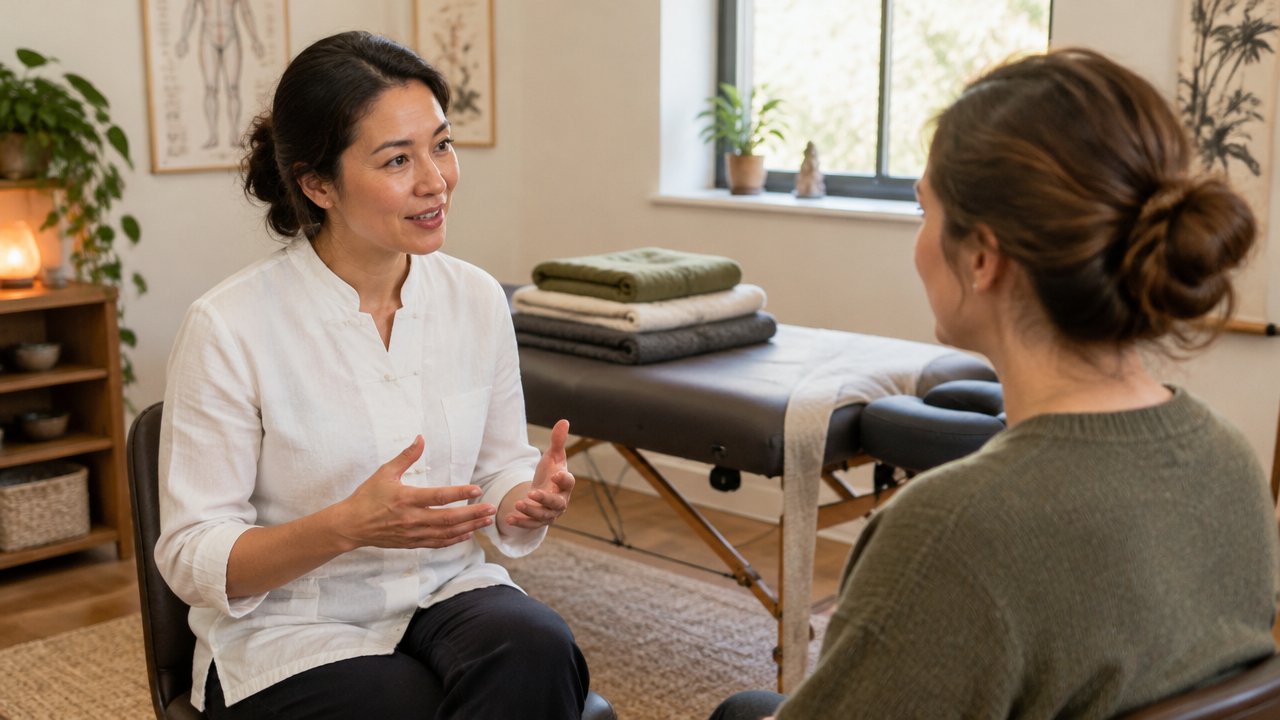
A straightforward page might answer three questions: What kind of relief has been studied? What remains uncertain? What would we discuss at a first appointment? Then link to the first-visit guide and your actual clinics. A well-informed reader can decide whether to take the next step without a promised outcome doing the persuading.
5. Track which searches lead to the right appointments
Once a month, look at three things together: the queries that showed your clinic pages in Google, the visits or booking clicks those pages received, and the first appointments people actually attended at each location. Add one simple question to your usual conversation: “How did you find this clinic?” A person who answers “my neighbour” may also tell you they googled your name to check where you work. Both details matter.
Read the pattern before choosing the next job. If Gloucester-related searches keep showing the Stroud page, check your page titles, location details and internal links. If people find the Gloucester page and then book Stroud by mistake, fix the calendar. If they arrive from a respected local clinic’s directory already knowing who you are, look after that listing. These are three different jobs, only one of which involves writing more words.
The following Monday, the two Rozes finally meet. An appointment is completed. Afterwards, the patient says she’d happily recommend the practice to her sister, who lives in Stroud.
“Should I send her the website?”
The acupuncturist reaches for her phone. “I’ll send you the Thursday page.”
Before putting more time or money into attracting acupuncture patients, check that your fees and the number of paid appointments you need add up. Do the maths for your practice.
Once acupuncture patients find you, what happens before, during and after their appointment matters too. Give great service in your practice.
More on be visible online

Where to go next
The same principle in other professions
Ideas often travel well between modalities.

How to Build a Psychotherapy Website That Reflects Your Values (Even on the Booking Page)
Miriam spent a fortnight getting her About page to sound like her. Then her booking software congratulated her on choosing a better you.

How to Build a Life Coaching Website That Makes People Think “That’s Me”
Fran has a decision to make. Dev’s website has a mountain. Here’s how to help a prospective coaching client recognise the conversation they want to have.
How to Build a Hypnotherapy Website That Puts First-Time Clients at Ease
Priya’s biscuit tin collects the questions people hesitate to ask. They turn out to be the most useful starting point for her hypnotherapy website.
How to Build a Kinesiology Website: 5 Questions Clients Ask Before They Book
Ruth sends the website link, then a voice note explaining it. Ellie’s new website aims to give prospective clients everything they need without the commentary.