
How to Build a Kinesiology Website: 5 Questions Clients Ask Before They Book
Ruth sends the website link, then a voice note explaining it. Ellie’s new website aims to give prospective clients everything they need without the commentary.
Published by the GROW Formula® team · Updated
When Ruth recommends her kinesiologist to a friend, she sends three things. First, a link to the website. Second, a voice note explaining the website. Third, a correction to the voice note because she said “wear something loose” and has since begun to worry that Carole will turn up in a kaftan.
Carole owns a kaftan. This was a closer call than Ruth realises.
Ruth’s kinesiologist, Ellie, finds out about this arrangement when Carole arrives for her first appointment and says, “Ruth said to tell you I found the blue door all right. Also, I’m wearing trousers.”
Somewhere in town, a woman with a full-time job and two whippets has unofficially become the unpaid explanatory department of Ellie’s practice.
If you’re building a website for your kinesiology practice, find your Ruth. Ask what she tells people after she sends them your link. Those little bits of explanation are often the most useful copy you’ll ever get. Here are the five questions Ellie and her fictional explanatory department would start with.
1. What kind of kinesiology do you practise?
Ellie’s homepage opens with Welcome to In Balance. Carole is pleased to be welcome. She would be more pleased still to know she has the right Ellie. Her search has already turned up a movement science course and a reel about putting blue tape on a runner’s knee. She’s open to new experiences, but a three-year degree feels quite a commitment for Tuesday afternoon.
If you practise kinesiology as a complementary therapy, say so in the first few lines. Name your branch, give your town or neighbourhood and tell the reader one thing they can picture themselves doing with you. Here’s a possible opening:
Kinesiology in Frome with Ellie I’m Ellie, a complementary therapy practitioner working in Frome. If you’re curious about kinesiology, you’re welcome to book a first visit and see how I work. We’ll talk about what brings you here, and I’ll show you what I mean by muscle monitoring before we begin.
Use a web address close to your practice name. Carry the same name, location and description into your directory listings so someone following a recommendation can recognise you. Beside your introduction, use a recent photograph that actually looks like you. Ruth can then send the link with “That’s her” and get on with walking the whippets.
2. What will you ask me to do during muscle testing?
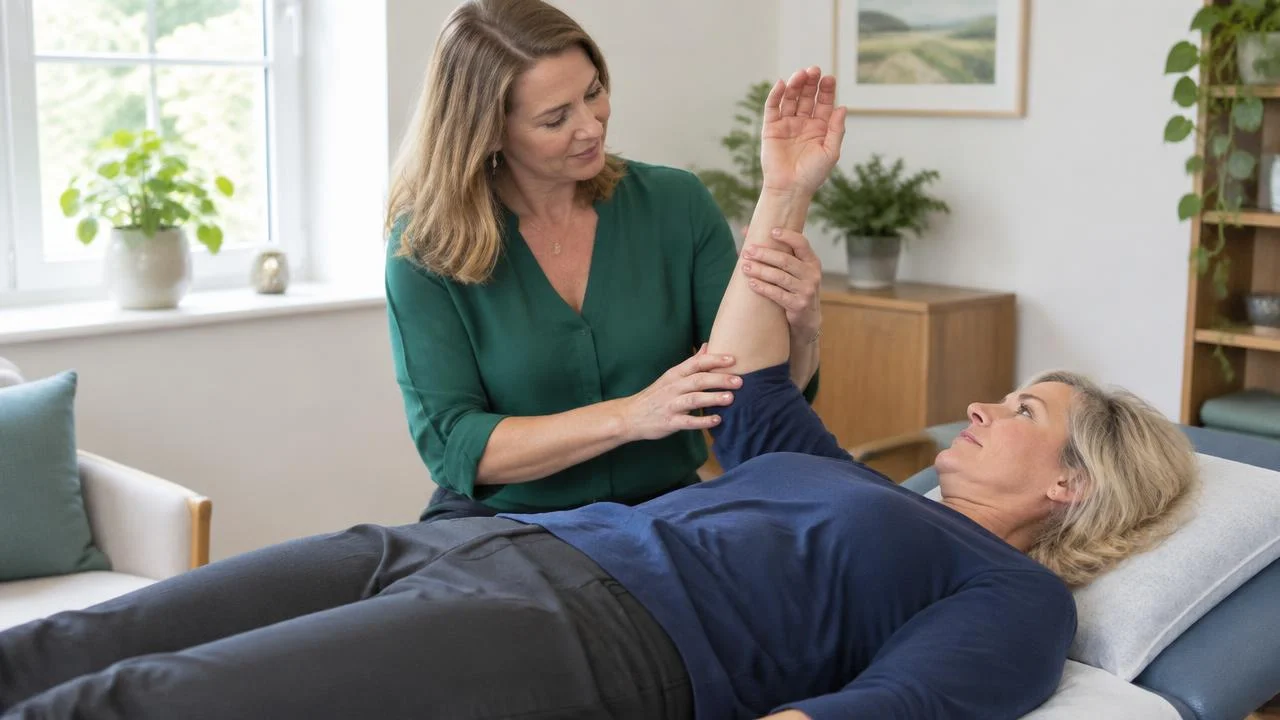
The best bit of Ruth’s voice note is seven seconds long. “I lay on the couch with my clothes on. She showed me where to put my arm, then pressed it gently.”
Ellie’s website devotes a paragraph to the body’s innate wisdom. Carole listens to Ruth’s seven seconds twice.
Try writing this part of your site as if you had to describe the appointment to somebody watching through a window with the sound off. What position is the client in? Where are your hands? What do you ask the client to do? Then put the sound back on. When do you explain the technique and ask permission? How can the client tell you that a position is uncomfortable?
For example, if it matches your practice:
You stay fully clothed. I’ll explain the movement first and check you’re comfortable trying it. I may ask you to hold one arm in position while I apply gentle pressure. There’s no score to aim for. If a movement is uncomfortable or you’d like to stop, tell me and we’ll pause.
The Kinesiology Federation describes a demonstration of muscle monitoring as part of a session and notes that what follows varies between branches. This is a good reason to describe your appointment. Add one detail clients regularly ask you about, such as whether they can sit in a chair or what clothes allow comfortable movement. That sentence alone might save a perfectly good kaftan from an unnecessary outing. Kinesiology Federation guide to a session
3. What can muscle testing actually tell me?
Ruth and Carole have another friend who wants to know whether kinesiology could identify which food disagrees with him. He’s seen a photograph online of somebody holding a small vial. If that photograph appeared on your service page, what conclusion might a reasonable person draw from it?
This is where an ethical kinesiology website needs an especially careful edit. The UK’s Committee of Advertising Practice says it has accepted no specific claims for the effectiveness of kinesiology. Claims that it can diagnose or treat a condition or symptom, including claims implied by the advertising, require robust evidence. CAP gives descriptions of gentle touch, relaxation and a sense of wellbeing as examples of wording more likely to be acceptable. That distinction applies to the impression the whole page gives, including its pictures and testimonials. CAP guidance on kinesiology
Give the food question a direct answer if it comes up in your practice. “I don’t offer food allergy or intolerance diagnosis. If you’re worried about a reaction to food, speak to your GP.” Someone hoping for a diagnostic test can make an informed decision before spending money. CAP guidance on food allergy and intolerance testing
There’s plenty you can say with confidence. Explain what training you completed, where you completed it and which professional membership you hold. Link to your register entry if you have one. A photograph of you demonstrating the arm position, with a consenting model, will tell Carole considerably more about her visit than a row of vials ever could.
4. Which appointment do I need, and what will I pay?
Carole reads Initial balance, Follow-on balance and Extended balance. She knows she’s new. She’s less sure how extensively she intends to be balanced. Is that something she’s supposed to know about herself?
Use names somebody can choose on the first attempt. Put the total time and price beside each one. For Ellie’s practice, an illustrative menu might read:
| Appointment | What’s included | Fee |
|---|---|---|
| Introductory phone call, 15 minutes | Ask Ellie questions and decide whether to book a visit | Free |
| First kinesiology session, 75 minutes | Time to talk, see a demonstration and agree what you’re comfortable trying | £70 |
| Follow-up session, 50 minutes | For existing clients who would like another appointment | £50 |
Use your own timings and prices. If the first visit includes a longer conversation, explain that the appointment time includes it. If you offer a free introductory call, list it first and say who phones whom. Pick two or three practical details that particularly matter to the people you see. Ellie’s ground-floor room and late appointment after work might settle the decision for someone who already knows quite enough about kinesiology and is mainly interested in knees and buses.
5. Can I get from the recommendation to the right door on my own?
Test this the way your next client will experience it. Send your homepage link to somebody who hasn’t visited your practice. Ask them to open it on their phone, find the fee, choose a first appointment and tell you how they’d get there. Resist the urge to provide commentary. You’re trying to retire Ruth’s voice note, and replacing it with a live performance from Ellie is hardly progress.
Keep a prominent Book an appointment button within reach on every page. Have it open a calendar showing actual availability. Offer your business email, mobile number and a simple enquiry form for the person with one question left. Give a realistic reply time. Test that the form reaches your inbox and that the booking confirmation includes the right address.
And if your map pin takes people to the front of a converted mill containing a café, a framer and fourteen identical windows, add the sentence Ruth uses: “Walk past the café and use the blue door on your left.” A small photograph of that door may be the hardest-working image on the site. Compress it so it loads while the visitor is still outside the café.
A month later, Ruth recommends Ellie to somebody else. She sends the link. Her thumb hovers over the microphone. She has a lovely new phone and, if she’s honest, rather enjoys doing the voice.
Before she can get going, a reply arrives. “Booked for Tuesday. Blue door past the café?”
Ruth puts the lead on the whippets. Her work here is done.

Before putting more time or money into attracting kinesiology clients, check that your fees and the number of paid appointments you need add up. Do the maths for your practice.
Once kinesiology clients find you, what happens before, during and after their appointment matters too. Give great service in your practice.
Where to go next
The same principle in other professions
Ideas often travel well between modalities.

5 Things Every Osteopathy Website Should Tell a First-Time Patient
Nina has packed more for her osteopathy appointment than she took to Portugal. Five practical answers on your website could spare her the suitcase.

5 Reflexology Website Fixes That Turn Vouchers into Visits
Jean’s reflexology voucher has spent four months under a ceramic lemon. Five website fixes could help her take it off the fridge and book.
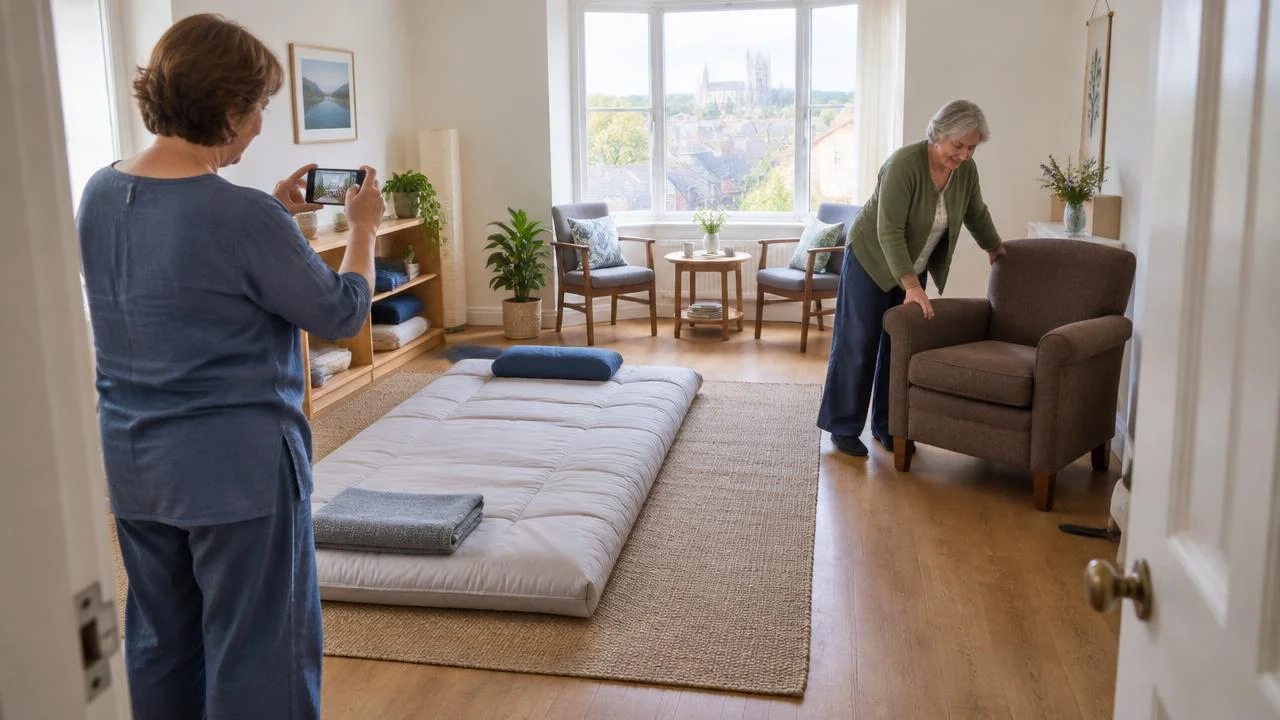
4 Photos Your Shiatsu Website Needs (and What to Write Underneath)
Anna’s friend Val wants the brown chair back in shot. Four photographs and useful captions can answer the questions newcomers hesitate to ask.

5 Ways to Make Your Bowen Therapy Website Work With One Thumb
Tess wants the price of a first appointment. Her whippet has other plans. Five mobile website fixes can help newcomers book with one thumb.