
5 Reflexology Website Fixes That Turn Vouchers into Visits
Jean’s reflexology voucher has spent four months under a ceramic lemon. Five website fixes could help her take it off the fridge and book.
Published by the GROW Formula® team · Updated
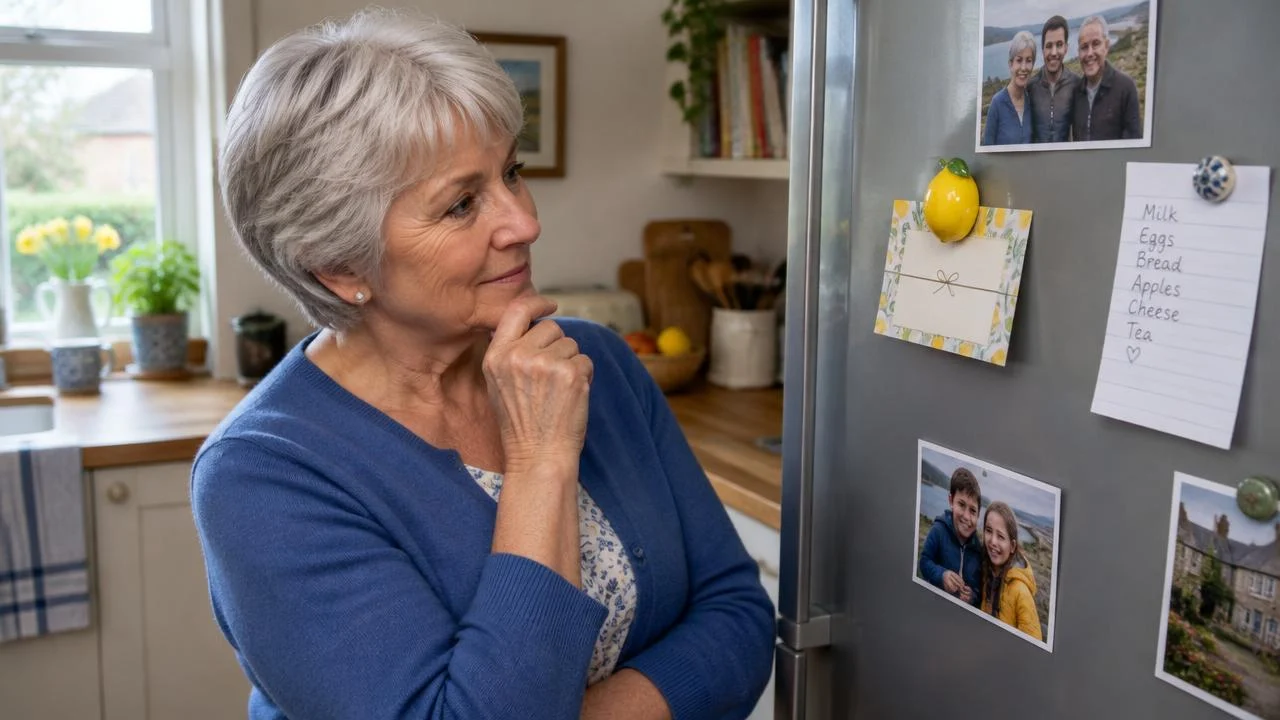
The reflexology voucher has been on Jean’s fridge for four months. It’s held up by a ceramic lemon. In that time she has booked an MOT, renewed her passport and successfully disputed a parking fine in a town she has never visited. We can probably rule out difficulty with administration.
Her daughter bought her the voucher for her birthday. Jean would quite like to use it. There’s just one thing.
“What if it tickles?”
She’s typed the question into the reflexologist’s contact form twice. Both times she’s deleted it. There’s something about signing off Kind regards, Jean underneath an enquiry about the behaviour of your own feet that makes a woman reconsider how much she wants an afternoon out.
A gift voucher gives a reflexology practice two different website visitors. The buyer knows what to buy. The recipient has to decide whether they want somebody touching their feet. If you’re building a reflexology website, the second person deserves as much thought as the first. Here are five changes that can help a voucher make it off the fridge.
1. Write a welcome for the person who didn’t choose reflexology
The voucher takes Jean straight to a page headed Give the gift of wellbeing. She has already received the gift of wellbeing. Apparently the next step is to give it to somebody else. At this rate it could travel quite widely without anybody having to take off a sock.
Keep your gift sales page, but give the recipient a separate route labelled I have a voucher. Print a short web address on the voucher itself. If you include a QR code, put the address in ordinary type beside it, large enough to read without a second pair of glasses.
The first thing on that page can be a welcome from the person they’ll meet. For our fictional reflexologist in Taunton, it might read:
I’m Alison. If someone’s given you a voucher and you’ve never had reflexology before, you’re very welcome. Here you can see what a visit involves, look at available times or send me a question before you decide when to come.
Add a recent photo of yourself in your treatment room. Use your full name, practice location and the same business name that appears on the voucher. Put your training and current professional memberships where someone can check them. Jean knows her daughter thinks highly of Alison. She’d quite like to form her own opinion before meeting her in her socks.
2. Answer “Will it tickle?” before you explain the foot chart
Alison’s homepage has a beautiful diagram of a foot. Every part is labelled. Jean can now locate six things she wasn’t looking for and remains none the wiser about the tickling.
Lead with what the session will feel like to take part in. Explain where the person sits or lies, what clothing they remove, how you use your hands and what they can do if they want you to change the pressure. For instance:
For foot reflexology, you’ll take off your shoes and socks and settle into the reclining chair. I’ll use my thumbs and fingers to apply pressure to different areas of your feet. People experience the touch differently. If anything tickles or feels uncomfortable, tell me. We can adjust the pressure, move to another area or stop. You’re welcome to keep talking or to enjoy some time without conversation.
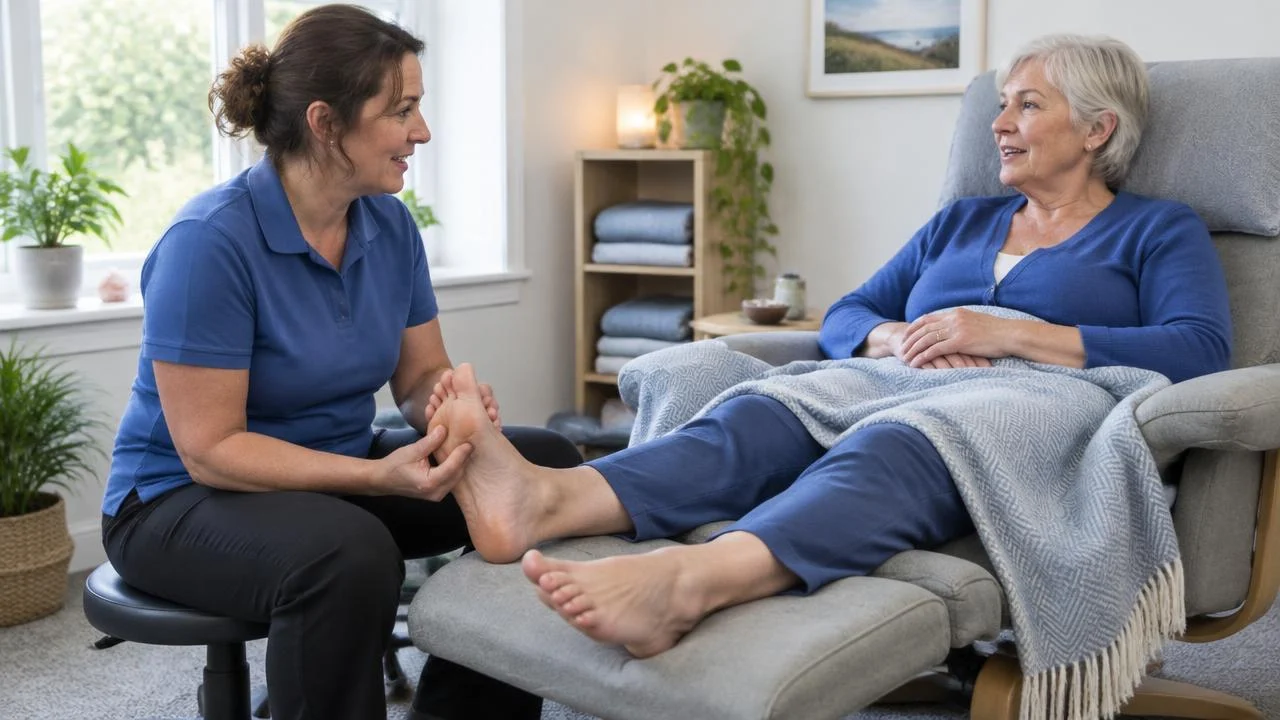
Use your own setup and your own words. One honest sentence about what you can change is kinder than guaranteeing that even the most ticklish person will feel nothing of the sort. If you’re trained in hand reflexology and offer it as an alternative, explain whether the voucher covers it and whether the recipient needs to choose it when booking.
This is also the place to answer the question Jean’s friend Brenda raises over tea: “Do you have to go and get your feet done before you go and get your feet done?” If there’s no need for a pedicure, say so. The words Come as you are become considerably more convincing once you’ve mentioned the toenails.
3. Explain what the voucher buys, down to the last pound and minute
The card says £50 towards reflexology. The booking system lists First visit, £60 and Reflexology, £50. Jean has never been before. Does her birthday present require a tenner? Will the £50 appointment leave enough time for Alison to ask the first-visit questions? Neither woman wants to discover the answer while Jean is putting her shoes back on.
Decide how your practice handles this, then put the answer in three places: the page where the voucher is bought, the voucher itself and the booking screen. If the gift covers the whole first appointment, a line like this does the job:
First-visit reflexology voucher, £60. Covers one 60-minute appointment, including our initial conversation and time to get settled. The recipient has nothing extra to pay for this visit.
If you sell vouchers for a cash amount, give a worked example instead: “A £50 voucher can be used towards a £60 first visit. The remaining £10 is payable at the appointment.” Prices here are illustrative. Use your actual fees, expiry terms and redemption arrangements. Be explicit about whether someone needs to book by the expiry date or attend by it. A surprising amount can hinge on one verb, particularly once the ceramic lemon has enjoyed a four-month head start.
4. Give the recipient enough information to make their own decision
Jean’s daughter chose reflexology because her mum spends much of the week doing things for other people and might enjoy an hour when somebody else has thought to put a blanket out. That’s a good gift. The website can describe that experience quite plainly.
Talk about the room, the touch, the opportunity to rest and how you’ll check what suits the individual. If a potential client wants to know about reflexology theory, give them a plainly labelled explanation they can choose to read. Take care with diagrams, service names and testimonials that might imply you can identify or treat a medical condition by working on a particular point.
UK advertising guidance says descriptions of relaxation and a sense of wellbeing are likely to be acceptable. Claims to diagnose or treat health conditions require appropriate evidence. If you publish genuine feedback with permission, a comment about feeling comfortable asking for lighter pressure answers a real first-visit question without making a medical claim. CAP guidance on reflexology
Choose two or three details that genuinely affect whether people can come. For Alison, that’s a downstairs room, parking by the entrance and time between appointments for clients who need a little longer getting up from the chair. A photo of the chair in its upright position tells Jean more about getting into it than a close-up of two exceptionally smooth heels.
5. Try redeeming the voucher on your own phone
Start with the actual card or gift email. Follow its link on a phone using mobile data. Choose the right session, enter a test voucher code and see what the checkout asks you to pay. If someone with a fully paid voucher is asked for card details to secure the appointment, explain why before they reach that screen. Check that the confirmation shows the right balance, practitioner, address and time.
Keep an ordinary Book reflexology button visible on every page for people paying for themselves. Give both groups a business email address, mobile number and short contact form, with a realistic reply time. Include directions, a map and practical access information. Ask a friend who’s never visited to try the whole journey. The moment they put the phone down to ask you something is usually where the instructions need another sentence.
Jean eventually books on a Tuesday afternoon. She has read Alison’s answer about ticklish feet. She’s also learnt she can ask for a change without having to wait for a formal interval, which was information she could have used at several hairdressers over the years.
“Bit lighter there, please,” she says, ten minutes in.
“Of course,” says Alison, and adjusts her touch. The rest of the hour is Jean’s.
That evening her daughter rings. “Did you use your present?”
“Yes,” says Jean. “Lovely woman. I booked again.”
There’s a shopping list under the lemon now.
Before putting more time or money into attracting reflexology clients, check that your fees and the number of paid appointments you need add up. Do the maths for your practice.
Once reflexology clients find you, what happens before, during and after their appointment matters too. Give great service in your practice.
Where to go next
The same principle in other professions
Ideas often travel well between modalities.
3 Reasons to Book Pilates That Belong on Your Website
Alice’s students chose her studio for an early introduction, six places and a booking they could move. Their answers can help your Pilates website earn its space.
How to Build a Personal Trainer Website That Gets More Bookings
Mo wants help with the rowing machine, not an application to change his life. Build your website around a first meeting that new clients can actually book.

How to Build a Doula Website That Overcomes Hesitation
Maya and Jo want to know who will turn up, what support includes and what it costs. Four website details can help families picture working with you.
SEO for Physiotherapists: 5 Ways to Help Local Patients Find Your Clinic
Local SEO for physiotherapists starts with matching a patient's words to a service you actually deliver, in a place they can reach.