
5 Things Every Osteopathy Website Should Tell a First-Time Patient
Nina has packed more for her osteopathy appointment than she took to Portugal. Five practical answers on your website could spare her the suitcase.
Published by the GROW Formula® team · Updated
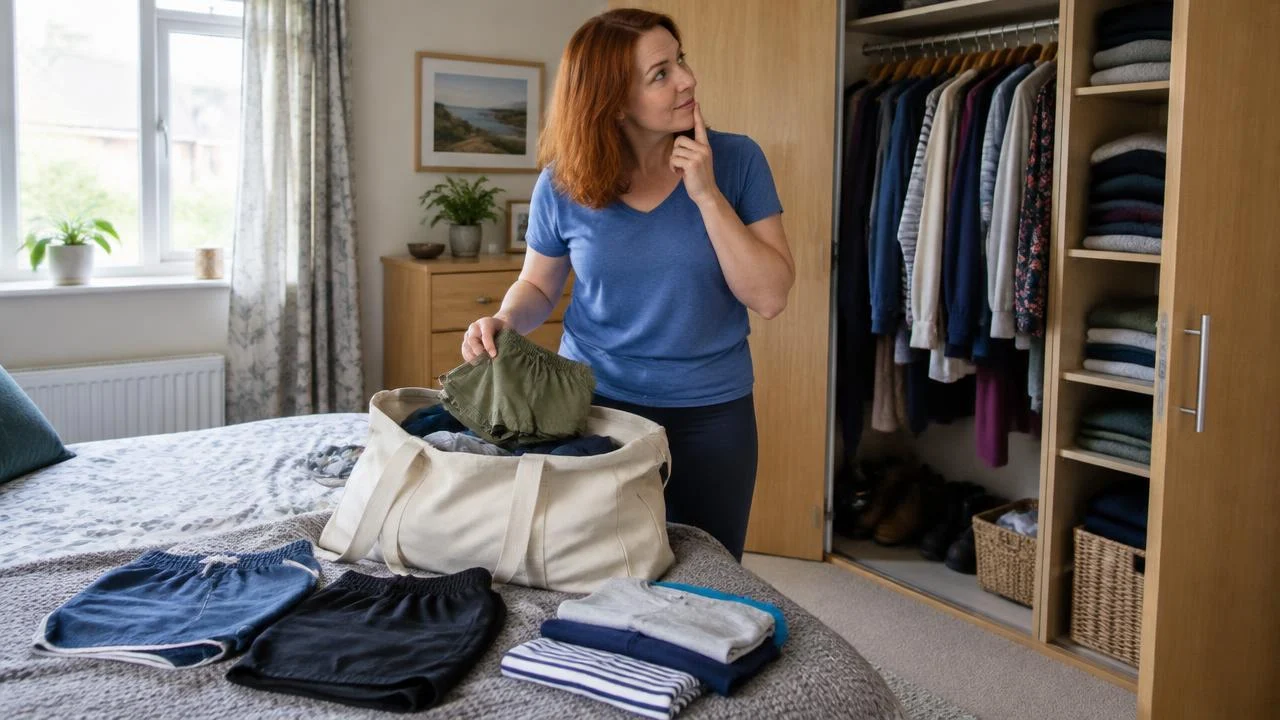
By the time Nina leaves for her first osteopathy appointment, she has packed shorts, leggings, a vest top and a second pair of shorts in case the first pair turn out to be the wrong sort of shorts. She’s going to a clinic twelve minutes from her house. She has taken less to Portugal.
The clinic’s website advised her to “wear something comfortable”. Nina’s most comfortable garment is a dressing gown advertising a brewery that closed in 2009. She suspects this is outside the spirit of the instruction.
Her osteopath, Hannah, is surprised by the size of the bag. “You could have come in what you’re wearing,” she says kindly.
Nina looks down at her leggings. “These were the third opinion.”
If you’re building a website for your osteopathy practice, think of Nina the evening before she books. What do you explain so naturally in the treatment room that you’ve never thought to put it online? Five well-placed answers can spare a prospective patient a difficult phone call, a missed appointment or, at the very least, a small suitcase.
1. Tell me what to wear, and what I can choose
A page called Your first osteopathy appointment is an excellent home for the clothes question. Give it an actual heading. Somebody searching on their phone while standing in front of an open wardrobe is unlikely to look under Our philosophy.
The General Osteopathic Council explains that an osteopath may ask a patient to adjust or remove some clothing for an examination. Patients can say if they feel uncomfortable and discuss other ways to proceed. Translate that into the words you use in your own practice. GOsC guide to what happens at an appointment
Hannah, our fictional osteopath, might write:
A T-shirt and leggings or loose trousers are useful choices. If you’re coming straight from work, you’re welcome to bring a change. If it would help to see an area in more detail, I’ll explain why and ask how you feel about adjusting your clothing. You can say what you’d prefer to keep on and we can discuss the options. There’s somewhere private to change.
Make the details true of your room and the patients you see. Then put a link to that section in the booking confirmation. It deserves to be findable both when Nina chooses a practice and when she starts packing for her expedition.
2. Tell me what the examination involves before I’m standing in the room
Nina wants help with a shoulder that makes putting on a coat a two-person job. She can picture describing the problem to Hannah. What she can’t picture is the bit between pointing at her shoulder and lying on a treatment couch.
Use a short passage to walk a visitor through that part of a first consultation. For example:
We’ll start sitting down so you can tell me what’s been happening and which activities it’s getting in the way of. For a shoulder problem, I might ask you to show me a movement you find difficult. I’ll explain any examination I suggest, including where I’d like to place my hands and why, and ask your permission. Afterwards we’ll discuss what I’ve found, whether osteopathic treatment is appropriate and what other options you have.
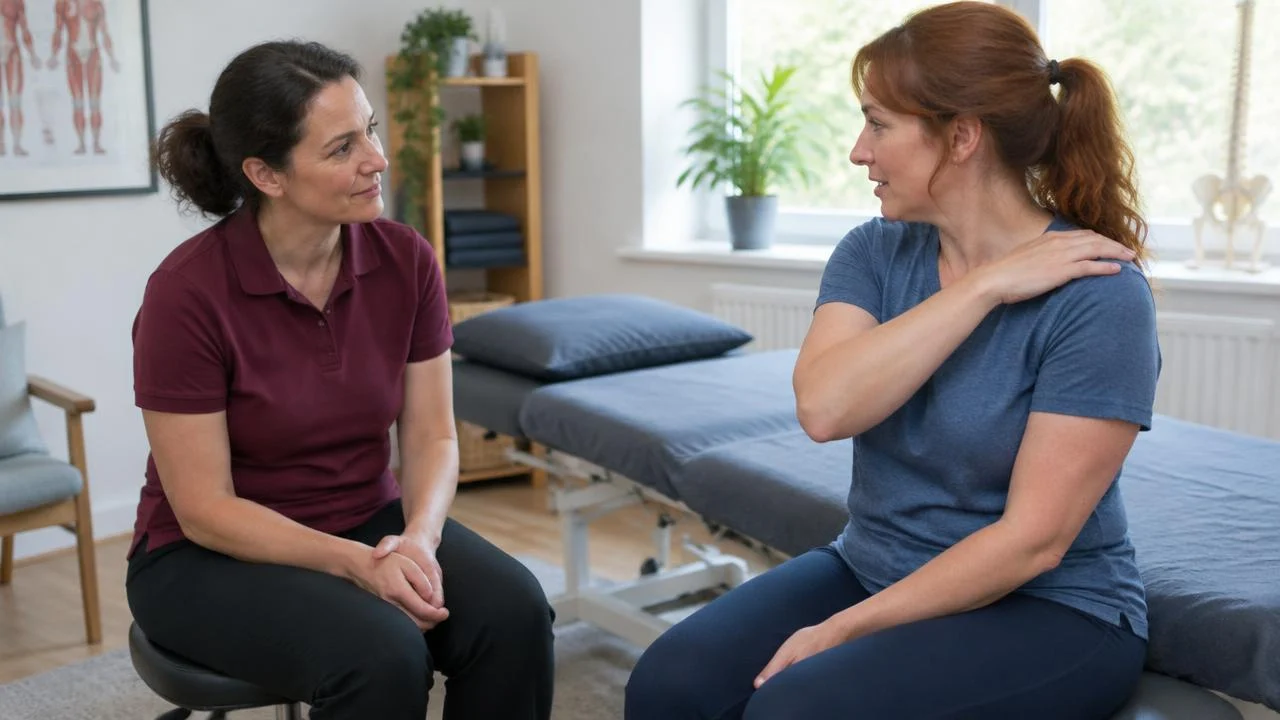
Describe how patients can ask to pause, decline part of an examination or bring someone along. Be specific about the arrangements for a chaperone, including how to request one in advance. A friend accompanying someone and a clinic arranging a chaperone are different offers. Spell out how each works in your practice. The GOsC specifically invites osteopaths to review what patients are told about both before a first visit. GOsC guidance on putting patients at ease
Give your reader a recognisable face and name alongside those words. Add a recent photograph, your qualification and a way to check your General Osteopathic Council registration. “I’ll explain what I’m doing” carries more weight when Nina knows who I is.
3. Tell me whether this practice suits the thing I want to do again
On her original homepage, Hannah had written that she treated “a range of musculoskeletal complaints”. Nina has never once described her shoulder as a musculoskeletal complaint. She has described it as “the reason I’m still in my coat” while sitting through twenty minutes of parents’ evening.
Write about the activities that bring people to your door. A first line such as “I’m Hannah, an osteopath in Salisbury. At your first appointment I’ll ask which movements are difficult and what you’d like to get back to doing” gives someone a place, a person and an easy opening to a conversation. Use the rest of the page to describe your particular experience and the patients your practice is set up to welcome.
Be precise when describing conditions or outcomes. Someone struggling to put on a coat has told you what matters to them. They haven’t given you a diagnosis, or enough information to promise when they’ll be comfortable again. UK advertising guidance identifies claims accepted for osteopathy and explains when further evidence is needed. Check headings, testimonials and captions as well as the paragraphs underneath. CAP guidance on chiropractic and osteopathy advertising
Choose a couple of practical details that might genuinely decide the booking. Hannah offers a downstairs room and a place to change for people arriving from work. Show the route from the street as well as the room itself. A photograph taken from inside a beautiful clinic has yet to tell anybody whether there are six steps on the other side of the door.
4. Tell me how much time and money to set aside
Nina can take an hour out of work. Her colleague is covering reception and would quite like to know whether “an hour” includes getting there and back, because at ten past two somebody is arriving to service the photocopier and this has already been rescheduled twice.
Put the appointment length, fee and what happens during that time together. First appointment, 50 minutes, £75 tells Nina more than a service called Initial pathway and a separate page announcing prices from £45. If your first appointment includes time for treatment where appropriate and agreed, say so. If treatment requires a separate visit, give that price too.
Here’s illustrative wording for a follow-up: “A follow-up lasts 30 minutes and costs £45. At your first appointment we’ll discuss whether another visit would be useful, when that might be and how we’d review progress. You can decide before making another booking.” Substitute your own fees and arrangements. If you offer a free introductory call, list it first, explain what it covers and give it a separate booking link.
Practical costs belong here too. Pay-and-display parking, extra travel charges for home visits or a cancellation deadline can affect whether an appointment works for someone. The kindest time to mention them is while the person still has their diary open.
5. Tell me how to book, even if I land halfway through your site
A friend sends Nina a link straight to Hannah’s first-visit page. This is an easy detail to miss when you’ve designed a website by starting at the homepage every morning for three weeks. Your reader can enter through a side door. Make sure they can book from there.
Keep a plainly labelled Book a first appointment button within reach on every page. Link it to live availability, with the same appointment names and prices you’ve just explained. For someone who needs to check a detail first, give a business email, mobile number and a short contact form. Say when you’ll reply. “Can I bring my partner?” rarely requires a date of birth, a postcode and an account with one uppercase letter and a special character.
Test it on your phone using mobile data. Start on the clothing question, choose a first appointment and read the confirmation. Can you tell who you’ll meet, how much time to allow and where to go? Does the map lead to the patient entrance? If you work across more than one clinic, check which address the calendar sends out.
A few weeks later, Hannah asks a new patient whether she found the room easily. “Yes, thanks. And it was lovely knowing I could come straight from work.”
It’s a small remark. Hannah writes it down for the next time she wonders whether anyone reads the practical bits of her website.
Across town, Nina has a second appointment in her diary. This time she’s taking her keys, her phone and one pair of shorts. She’ll be wearing them.
Before putting more time or money into attracting osteopathy patients, check that your fees and the number of paid appointments you need add up. Do the maths for your practice.
Once osteopathy patients find you, what happens before, during and after their appointment matters too. Give great service in your practice.
Where to go next
The same principle in other professions
Ideas often travel well between modalities.
4 Ways to Keep ‘Book Now’ in Sight on Your Yoga Website
Ruth has a lift, a free Tuesday and no yoga mat. Keep booking within reach at the moment your website answers a new student’s last question.
3 Reasons to Book Pilates That Belong on Your Website
Alice’s students chose her studio for an early introduction, six places and a booking they could move. Their answers can help your Pilates website earn its space.
How to Build a Personal Trainer Website That Gets More Bookings
Mo wants help with the rowing machine, not an application to change his life. Build your website around a first meeting that new clients can actually book.

How to Build a Doula Website That Overcomes Hesitation
Maya and Jo want to know who will turn up, what support includes and what it costs. Four website details can help families picture working with you.