
SEO for Massage Therapists: 5 Ways to Get Found for the Bookings You Want
The point of showing up in a local search is to have the right person book the right service, ideally at an address where one of you is expecting the other.
Published by the GROW Formula® team · Updated
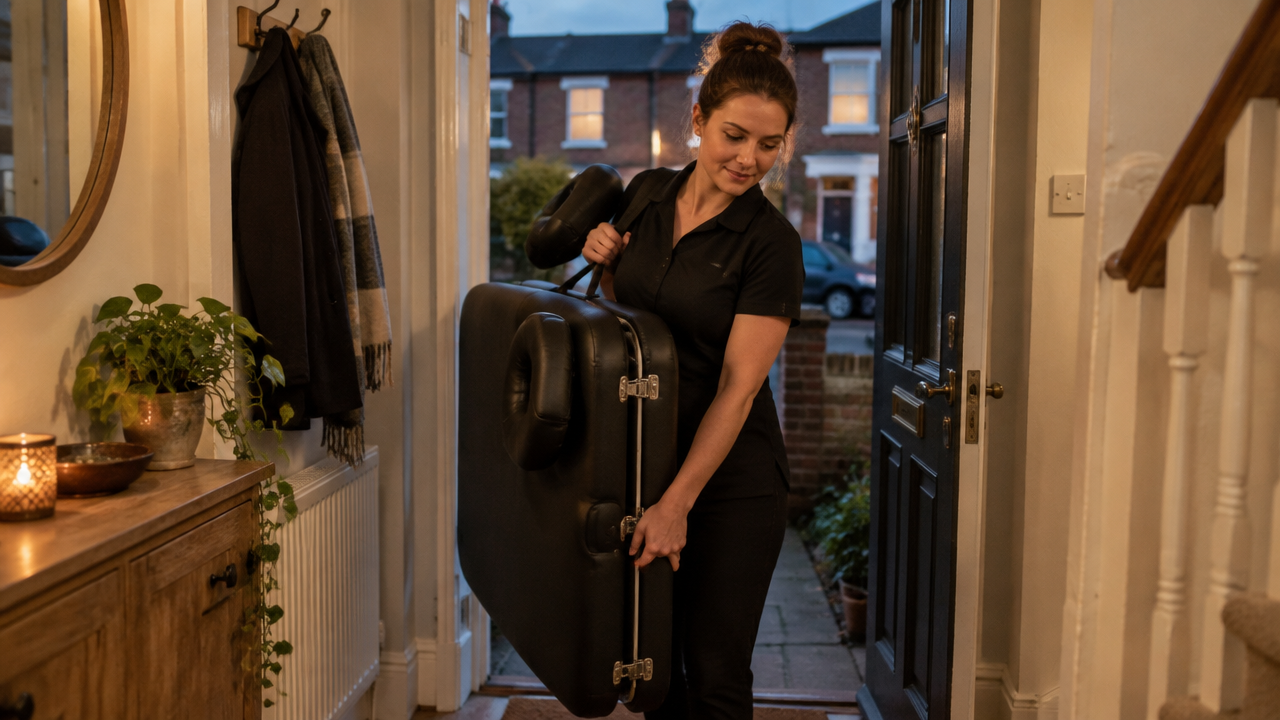
Clare has moved the coffee table, rolled up the rug and put the dog in the kitchen. At ten to six she moves the dog back into the sitting room because the dog has worked out where the bread lives.
Meanwhile, half a mile away, a massage therapist called Fiona has warmed her treatment room and put a clean towel on the couch. At six o’clock both women are ready. Unfortunately, each is rather counting on the other one to travel.
Clare searched massage at home Bath. Google found Fiona’s page, Massage in a relaxing home setting. Fiona meant her home. Clare, standing in a rectangle of suspiciously clean carpet, meant hers.
Both types of booking suit Fiona. She sees clients in her treatment room and offers home visits on Fridays. What she needs is a better way for people to find the one they want. If you’re working on SEO for your massage therapy business, start there. The point of showing up in a local search is to have the right person book the right service, ideally at an address where one of you is expecting the other.
1. Choose massage keywords by asking who’s going where
Take your three most common enquiries and underline the detail that determines whether you can help. For Fiona, it’s usually location, type of massage or availability. Can you come to my flat? and Can I come after work? sound similar until you’re packing a folding couch into a hatchback.
Here are examples of search phrases to investigate. They illustrate different intentions and carry no assumed search volumes.
| Possible client search | What the client is trying to establish | Best page to send them to |
|---|---|---|
| massage therapist in Bath | Who can I see locally, where are they and what will it cost? | A treatment-room page with your address, fees and calendar |
| mobile massage Bath | Will you come to my home and do you cover my area? | A home-visit page with coverage, travel charges and practical requirements |
| sports massage Bath | Does this therapist offer the specific service I want? | A sports massage page if you offer it, with qualifications, session details and location |
| what to wear for a massage | What happens when I arrive and what choices do I have? | A first-visit guide that answers the question straight away |
Look at the search results for each phrase in your area. Then check it against the bookings you actually want. If you work entirely from a treatment room, mobile massage is a poor target even if the search looks popular. If several names describe the same appointment, cover them naturally on one page. Fiona has one back, neck and shoulder session. She has resisted the temptation to create a separate web page for each shoulder.
2. Give your treatment room and your mobile service different pages
This is the change that would have saved Clare most of her furniture removal. Fiona’s two services have different fees, availability and booking questions. Each earns its own page with a specific title.
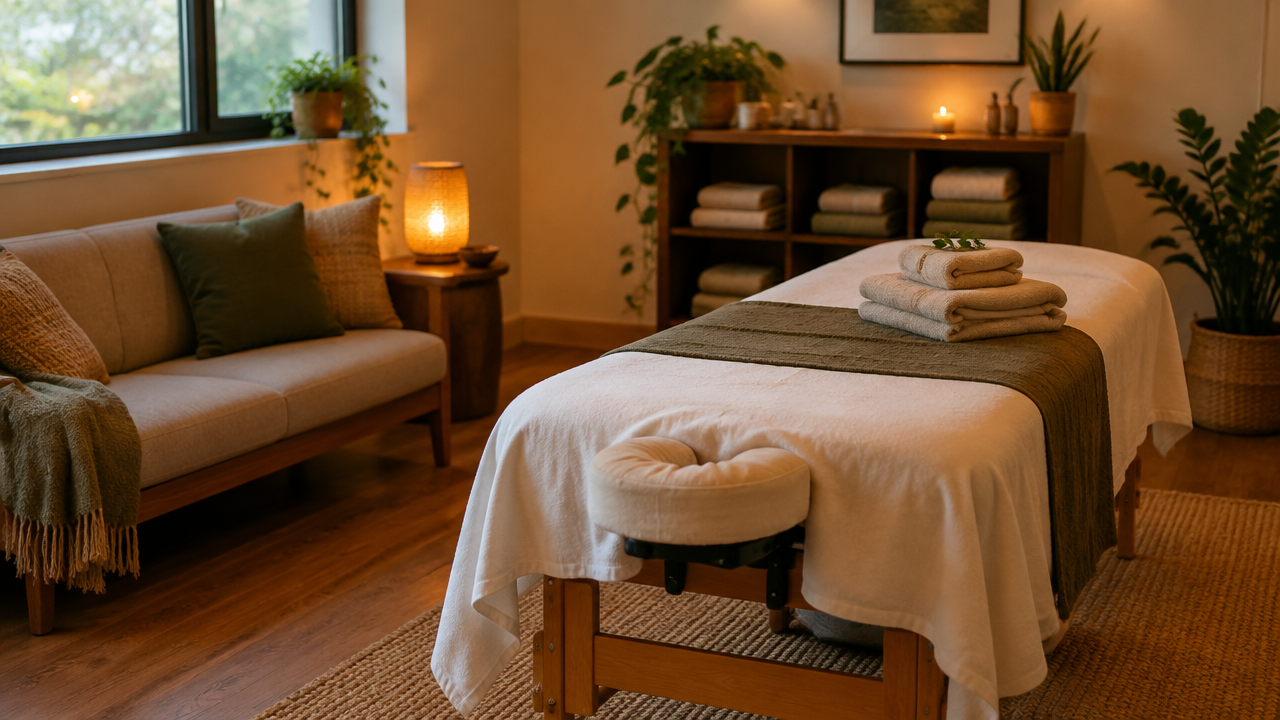
On Massage in Bath | Fiona’s Treatment Room, show the venue, the entrance, access information, session options and the first available appointments. A photograph of you in the room helps a new client recognise both the place and the person. Include your relevant qualifications and explain how you agree the areas worked on and the pressure used. A service description can be specific about relaxation and the experience you provide. Stronger health claims need appropriate evidence. CAP guidance on massage and bodywork
On Mobile Massage in Bath | Home Visits with Fiona, answer the questions only a visiting therapist can answer. Here’s an illustrative opening:
I bring my massage couch, towels and equipment to homes in Oldfield Park, Widcombe and Bear Flat on Fridays. A 60-minute massage costs £70 including travel in these areas. Before you book, check the space needed for the couch below. If you’re unsure about stairs, parking or your postcode, you’re welcome to ask.
Add your actual floor-space requirements and allow for room to work around the couch. A diagram with measurements can be more useful here than a gallery of candles. State when you’ll arrive to set up and whether the advertised hour means massage time or the full visit. Clare would gladly have measured the sitting room before moving the furniture. She has a tape measure and, by this point, a fairly strong interest in getting her evening back.
Use Book at the treatment room and Book a home visit as the respective buttons. Carry the wording, location and total fee into the booking calendar and confirmation. A shared button labelled Experience tranquillity leaves an unreasonable amount of logistics to tranquillity.
3. Make Google Maps reflect how you actually work
Search your practice name on Maps before creating anything. If a profile for your business already exists, request access to it and correct the details. For an eligible business, the appropriate setup depends on how clients see you:
- Clients visit your premises. Check Google’s requirements for a customer-facing location, including permanent business signage if you display the address. Show the hours when clients can actually see you and check the map pin from street level.
- You travel to clients and don’t receive them at your base. Use a service-area profile and hide the base address. Enter the towns or postcodes you genuinely cover. Google lets you specify up to 20 areas, which is a ceiling rather than a personal challenge.
- You receive clients at eligible premises and also make home visits. A hybrid profile can show the address and service area. Explain the two options on your website. Creating a new listing for each village on your Friday round would give a misleading impression of how many Fionas there are.
Choose the most accurate primary category, add a current phone number and link to the page that helps the visitor choose the appropriate booking. If you rent a room in another business, check the representation and signage rules for your arrangement before displaying the venue as your own premises. Google describes local ranking as depending mainly on relevance, distance and prominence. Selecting a town as a service area doesn’t guarantee that you’ll appear first to everybody in it. Google’s service-area guidance · Business representation guidelines · How Google ranks local results
4. Give the people who recommend you the right link
The local running club sends people to Fiona for sports massage. A nearby holiday cottage recommends her to guests who want a massage where they’re staying. Both have been linking to an old page that opens with “Welcome to my world”. For the purposes of getting a couch up a narrow staircase, the world could do with being more specific.
Look at the places a local person might already find you: your host clinic’s practitioner list, a professional directory you belong to, a club you genuinely work with, or a local accommodation provider that refers guests. Check the published information. Give each partner a short, accurate description and the link their readers need. The running club can point to sports massage appointments. The cottage can point directly to home visits, including a straight answer about whether holiday accommodation is covered.
An eligible Google Business Profile also gives clients somewhere to leave an honest review. Make this optional and easy, with a direct link. Invite feedback consistently, offer no incentive and let people decide what to share. A comment about the practitioner arriving when agreed and explaining exactly how much space was needed could settle the question for the next Clare. Protect privacy in any public response. Google’s review guidance · Google Maps contribution policy
5. Check which searches turn into the work you want
Once a month, open the Search results performance report in Google Search Console. Filter to your home-visit page and look at its queries, impressions and clicks. Do the same for your treatment-room page. If you have a Google Business Profile, its performance report can also show actions such as website clicks and requests for directions. Then count first appointments attended and ask new clients how they found you. Google Search Console performance report · Google Business Profile performance
For a mobile practice, one extra column is worth keeping: travel time. Six new bookings down the same road on two Fridays can be a better result than eight dotted across three counties. Record broad areas and totals. There’s no need to put clients’ home addresses into your marketing spreadsheet.
Let the pattern guide the next edit. If people keep enquiring from outside your patch, move your coverage and travel fees further up the page. If local people reach the right page but book the wrong service, fix the button or calendar. If most of your best home visits come via one cottage, keep its information up to date and find out what guests ask before they book.
The following Friday, Fiona arrives at Clare’s house at ten to six. The coffee table is by the window. There’s room on both sides of the couch. Somebody has put the bread on a higher shelf.
“Your email said you’d need ten minutes to set up,” says Clare. “I’ve allowed fifteen. He’s quite a long dog.”
Before putting more time or money into attracting massage clients, check that your fees and the number of paid appointments you need add up. Do the maths for your practice.
Once massage clients find you, what happens before, during and after their appointment matters too. Give great service in your practice.
More on be visible online
Where to go next
The same principle in other professions
Ideas often travel well between modalities.

Websites for Counsellors: Read This Before You Pay a Designer
Helen has twenty minutes and a cheese sandwich. Here's how to build a counselling website she can use before her lunch break ends.

How to Build an Aromatherapy Website That Gets Bookings
Jo has sixty quid from her birthday and a strong dislike of lavender. Here's how to build an aromatherapy website she can actually book from.
How to Build a Reiki Website That Attracts the Clients You’re Calling In
Nell sets an intention to welcome the people drawn to her work. One of them has spent eleven minutes on a page about the moon. Here's how to help him book.
How to Build a Psychotherapy Website That Reflects Your Values (Even on the Booking Page)
Miriam spent a fortnight getting her About page to sound like her. Then her booking software congratulated her on choosing a better you.