
How to Build an Aromatherapy Website That Gets Bookings
Jo has sixty quid from her birthday and a strong dislike of lavender. Here's how to build an aromatherapy website she can actually book from.
Published by the GROW Formula® team · Updated

Jo likes the idea of an aromatherapy massage. She likes a peaceful room, she likes having her shoulders massaged and she has sixty quid from her birthday. There’s just one problem. She hates lavender.
Specifically, lavender reminds her of the padded coat hangers in her aunt’s spare room. She knows it’s an excellent plant. It’s done very well for itself. She simply has no wish to spend her birthday face down in the wardrobe.
On the website of a local aromatherapist, Jo finds a treatment called Botanical Escape. In the photograph, three little amber bottles sit on a folded towel. What’s in them? Who chooses? Could she ask for something else? She feels faintly ridiculous emailing a professional to say she has personal history with a coat hanger. She closes the page.
If you’re looking at websites for aromatherapists, perhaps because you’re about to build yours or pay someone else to do it, Jo is worth keeping in mind. Your clients can’t smell a blend through a screen. What you can give them is a good sense of what will happen, who gets a say and how much it costs. Here’s what that looks like for an aromatherapy practice.
Start with the appointment a client can actually book
Let’s give that website a second go. The aromatherapist is called Mina. She works in a room in Bath, blends oils for each client and particularly enjoys working with people who have never tried aromatherapy before. None of this made it onto her original homepage. The bottles got in, though. All three of them.
Here’s a homepage introduction Mina could use:
Aromatherapy massage in Bath. I’m Mina. I offer one-to-one massage in my ground-floor treatment room in Widcombe. On your first visit, we’ll talk about what you’d like from the session and choose your blend together. You’re welcome to tell me which scents you love and which ones you’d happily never smell again.
A visitor now knows the service, the location and something genuinely distinctive about the experience. If your own practice offers consultations without massage, say that just as plainly. A person who wants advice about essential oils and a person who has set aside an hour for a massage could both search for an aromatherapist. They need to know which appointment to pick.
Choose the two or three details your clients care about most. For Mina, those might be choosing the blend together and having step-free access. For a mobile aromatherapist, the most useful sentence on the homepage might be “I visit clients at home in Frome and the surrounding villages.” Give that sentence some room before you start shopping for photographs of bergamot.
Let people picture their first five minutes
When Mina thinks about a first appointment, she pictures the massage. When Jo thinks about it, she pictures the bit just before the massage, when everybody else appears to know the rules and she’s still holding her handbag.
This is where a short What happens on your first visit? section earns its keep. Mina might write:
We’ll start with a conversation about your preferences, any sensitivities and what I need to know to plan your appointment. I’ll explain the massage and we’ll agree which areas you’d like me to work on. You can smell a proposed blend before deciding. If you dislike it, please say so. I’d much rather find out while it’s still in the bottle.
Use the details that are true of your service. What will the client keep on? How will they be covered? What happens if they want lighter pressure, a different scent or a moment to themselves? If someone has an allergy or is unsure whether the session is suitable, tell them how to speak to you privately before booking. An invitation to ask is more reassuring than a blanket promise that every oil suits everyone.
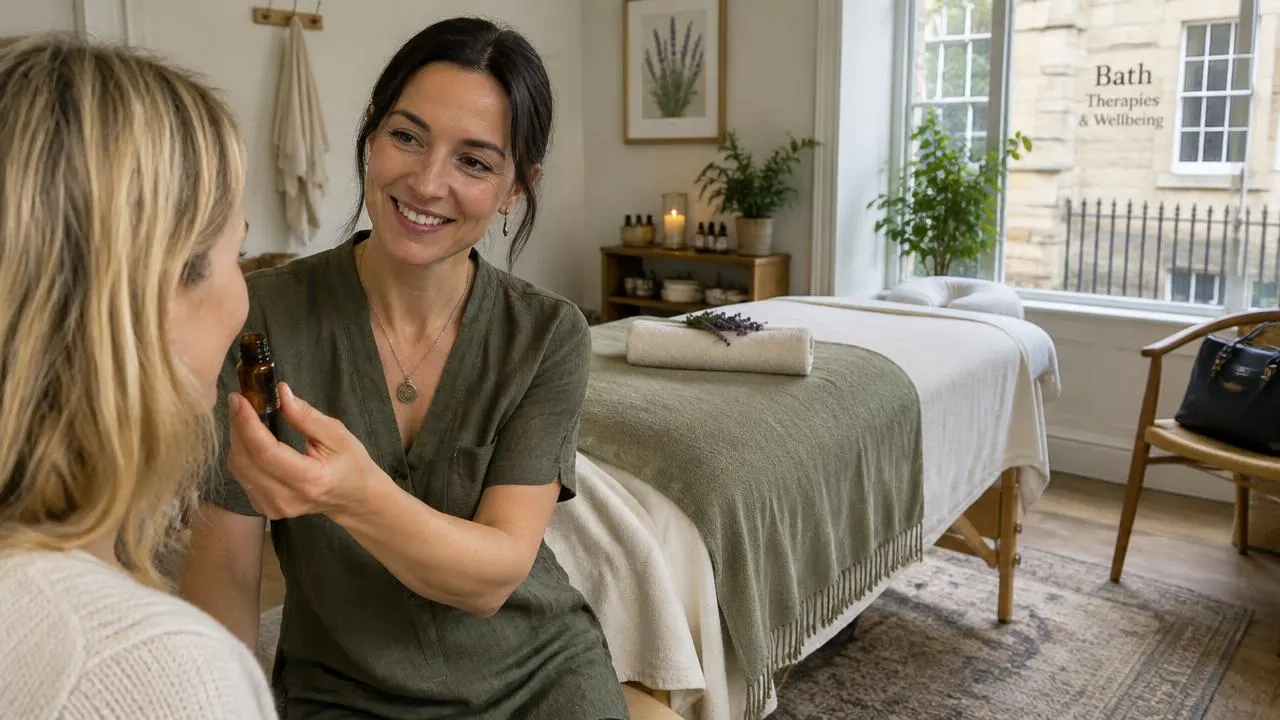
Put a recent, recognisable photograph of yourself beside this section, wearing what you usually wear at work. Add a photograph of the actual room if you can. Jo will have something familiar to look for when the door opens. The three bottles are welcome to appear in a supporting role.
Give each treatment a name, a price and a clock
Mina’s old booking menu offered Botanical Escape, Deep Serenity and Aromatic Reset. Jo had £60 and a bus to catch. Which of the three achieved serenity by quarter past four?
You can keep a treatment name you love. Pair it with enough information for someone to choose. Here’s an illustrative menu for Mina’s practice:
| Appointment | What the client is booking | Total time | Price |
|---|---|---|---|
| Free introductory call | A phone conversation if you have questions before deciding | 15 minutes | Free |
| First aromatherapy massage | An initial consultation, time to choose your blend and a massage | 60 minutes | £60 |
| Return aromatherapy massage | A shorter check-in, a review of your blend and a massage | 50 minutes | £50 |
The words total time matter. If an hour includes a consultation and getting changed, say so before someone books. And if you offer home visits, spell out where you travel, what space you need and any additional charge. Your price should be the same on the treatment page and in the booking system. Discovering another £12 at checkout puts a surprising amount of tension back into a pair of shoulders.
Show what qualifies you and choose your claims carefully
Give your training and professional memberships in a short bio. Use the letters and logos you’re entitled to display, and link to your professional register entry if you have one. Beside the qualification, give a small example of your judgement in practice. Mina’s explanation of how she checks preferences and adapts an appointment tells Jo something a badge alone can’t.
Take particular care when writing about what oils can do. UK advertising guidance distinguishes between describing a relaxing experience and making an objective health claim, which requires robust evidence. “An hour set aside for an unhurried massage after work” gives the reader something concrete to picture. “This blend treats anxiety” makes a clinical claim. Publishing the same claim in a client testimonial still puts it in your advertising. Use genuine feedback only with permission, and apply the same care to its wording as you would to your own. CAP guidance on aromatherapy
Give the booking button a proper rehearsal
Before you sign off an aromatherapy website design, open it on your phone using mobile data. Better still, hand it to someone who has never booked with you. Give them Jo’s birthday budget and ask them to book a first appointment. Watch where their thumb goes.
Can they find your practice by its name and town? See Thursday’s available times? Find the full fee? Open a map, work out where to park and tell whether there are steps? Does a plainly labelled Book now button stay within reach on every page and take them straight to your live booking calendar? If the photographs are still loading by the time your volunteer has eaten half a biscuit, ask your designer to look at that too.
Then give them a second job. They have a question they’d rather ask before committing. Can they find your business email, mobile number or a simple contact form? Name, email and message are enough for an initial enquiry. Say when you’ll reply and send yourself a test message to check it arrives. These two little rehearsals make a useful brief for a designer and a good final check if you build the site yourself.
On Mina’s revised site, Jo books the £60 appointment. On Thursday she recognises Mina from the photograph, finds the ground-floor room and puts her handbag on the chair. When they get to the oils, she says, “Anything except lavender, please.”
“Of course,” says Mina. “What sort of scents do you like?”
It turns out Jo likes citrus. They start there. The coat hangers never come up.
Before putting more time or money into attracting aromatherapy clients, check that your fees and the number of paid appointments you need add up. Do the maths for your practice.
Once aromatherapy clients find you, what happens before, during and after their appointment matters too. Give great service in your practice.
Where to go next
The same principle in other professions
Ideas often travel well between modalities.
5 Questions Your Homeopathy Website Should Answer
Pat has £80 and Tuesday afternoon free. Moira's website needs to tell her exactly what she's buying, without a single fern standing in the way.
5 Essential Acupuncture Website Fixes
Martin has been recommended by his sister and has his diary open. Kate's website needs to answer his questions about needles before a giant close-up puts him off.

5 Ways to Turn Massage Website Visits into Bookings
Leanne has £60, two shoulders and a Thursday afternoon off. Your massage website needs to help her book one good Thursday, not sit a philosophy exam.

4 Sports Therapy Website Fixes for the “Sporty Enough?” Problem
Rachel wants her Saturday run back, not a place in the professional squad. Your sports therapy website needs to show her she belongs.