
5 Questions Your Homeopathy Website Should Answer
Pat has £80 and Tuesday afternoon free. Moira's website needs to tell her exactly what she's buying, without a single fern standing in the way.
Published by the GROW Formula® team · Updated
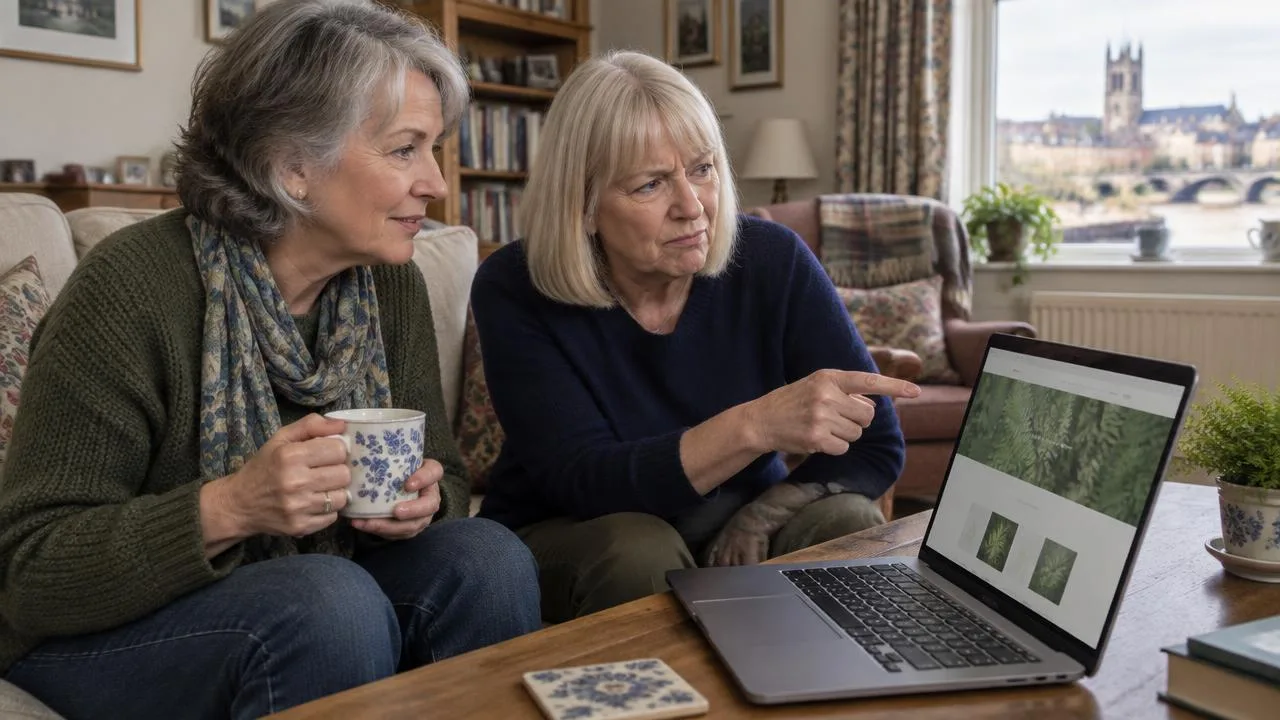
The first draft of Moira’s new homeopathy website arrives on a Friday. It has soft green lettering, a photograph of some ferns and a button marked Discover. Moira presses it. There are more ferns.
She’s a homeopath in Shrewsbury. She works upstairs from a picture framer. On a fine day you can see the bus station. Quite a lot of British woodland has been drafted in to represent a room with a perfectly decent view of the number 24.
Moira invites her neighbour Pat round to look at the draft. Pat used to book the village hall for weddings and has a particular talent for identifying what a person will need to know on the day. Once, at a meeting about chair covers, she established that nobody had hired any chairs.
Pat studies the screen. “Say my sister gave me your name. I’ve got eighty pounds and I can get into town on Tuesday. What exactly am I buying?”
That’s a good brief for a homeopathy website. Someone who arrives by recommendation may already be interested. They still need enough information to decide what the appointment is worth to them. Here are the five questions Moira, our fictional practitioner, answers before the site goes live.
1. What happens at my first consultation?
Moira’s first impulse is to explain the history of homeopathy. Pat has more immediate concerns. “Am I talking for the whole hour? Do I bring anything? If you suggest a remedy, can I think about it?”
Write your first consultation page by walking through one appointment in the order a visitor would experience it. Start with who greets them. Explain what you’ll ask about, what you’ll discuss together and what happens before they go home. If you offer online appointments, say which parts happen by video and how any remedy would reach the client.
For example, Moira could write:
At your first visit, we’ll have up to 75 minutes together. I’ll ask what brought you here and about your health history and everyday routines. You can bring notes if there’s something you’d like to remember. Towards the end, I’ll explain any homeopathic remedy I’m suggesting, whether there’s a charge and what a follow-up would involve. You can ask questions and take time to decide.
Use details that are true of your own practice. The practical description can sit one click from a homepage headed Homeopathy in Shrewsbury with Moira [surname]. Someone searching for the name they half remember from their sister’s text has a fighting chance of finding the right person. They can always read the history afterwards. So far Pat has shown remarkable restraint on the subject of eighteenth-century Germany.
2. What does the evidence say about homeopathy?
Pat’s sister is interested in homeopathy. Pat would like to know what evidence there is for it. They ought to be able to use the same website.
Give the question a prominent heading and answer it plainly. NHS inform says there is no good-quality evidence that homeopathy is effective for any health condition. Someone considering homeopathy for symptoms should seek appropriate medical advice and continue prescribed treatment unless their prescriber advises otherwise. Link to an independent source so the reader can explore the question in their own time. NHS inform on homeopathy
This affects the structure of your site as much as the wording. A designer may reasonably suggest a familiar menu called Conditions I treat. On a homeopath’s website, a list of illnesses under that heading would imply treatment claims before anyone had read a single paragraph. The UK advertising regulator specifically advises homeopaths to avoid direct or implied claims to treat medical conditions. A testimonial can make the same claim in somebody else’s words. ASA guidance on advertising standards for homeopathy
Moira replaces that menu item with What happens at a consultation? and Fees. For her About page, she gives her full name, training, current professional memberships and a recent photograph. Where there’s a register entry readers can check, she links to it. If you publish feedback, use genuine comments with permission and keep them to things the client can speak to, such as whether the fee was explained or they had time for questions. Having a client’s permission and having evidence for a health claim are two different things.
3. What will I pay, including remedies and postage?
Pat has found “Initial consultation £75”. She has also found “Remedies available where appropriate”. She would now like to introduce those two sentences to one another.
Put everything a client needs to calculate the cost in one place. This is especially important if the consultation, remedies and postage are charged separately. Here’s one way a practice might display illustrative fees:
| Appointment or item | What’s included | Price |
|---|---|---|
| Introductory phone call | 15 minutes to ask questions about the service before booking | Free |
| First consultation | 75 minutes in person or by video | £75 |
| Follow-up consultation | 30 minutes, booked separately if you choose | £35 |
| Remedy and UK postage | Optional in this example, with the price agreed before ordering | £8 in total |
Now Pat knows the visit by itself fits her £80 budget and adding a posted remedy would bring the total to £83. She has learnt this in private, without telling a stranger there’s only a fiver left. That’s a small courtesy a plain price list can offer.
Use your actual arrangements. If remedies are included, say so. If prices vary, explain how a client gets a quote and when they’ll be asked to agree to it. Put the same figures in your booking system and give the cancellation terms before anyone pays.
4. How do I find the practice, and can I get into the room?
Moira’s photographer asks whether she has anything else she’d like photographed while the light is good. In a moment of newfound resolve, she says, “The framer’s.”
It turns out the door to her consulting room is beside the framer’s window. Clients routinely ring her while standing outside a rather fine watercolour of a duck. She has described this duck to more strangers than she has described some members of her family. One photograph of the entrance, taken from the direction of the bus stop, would save everyone a phone call.
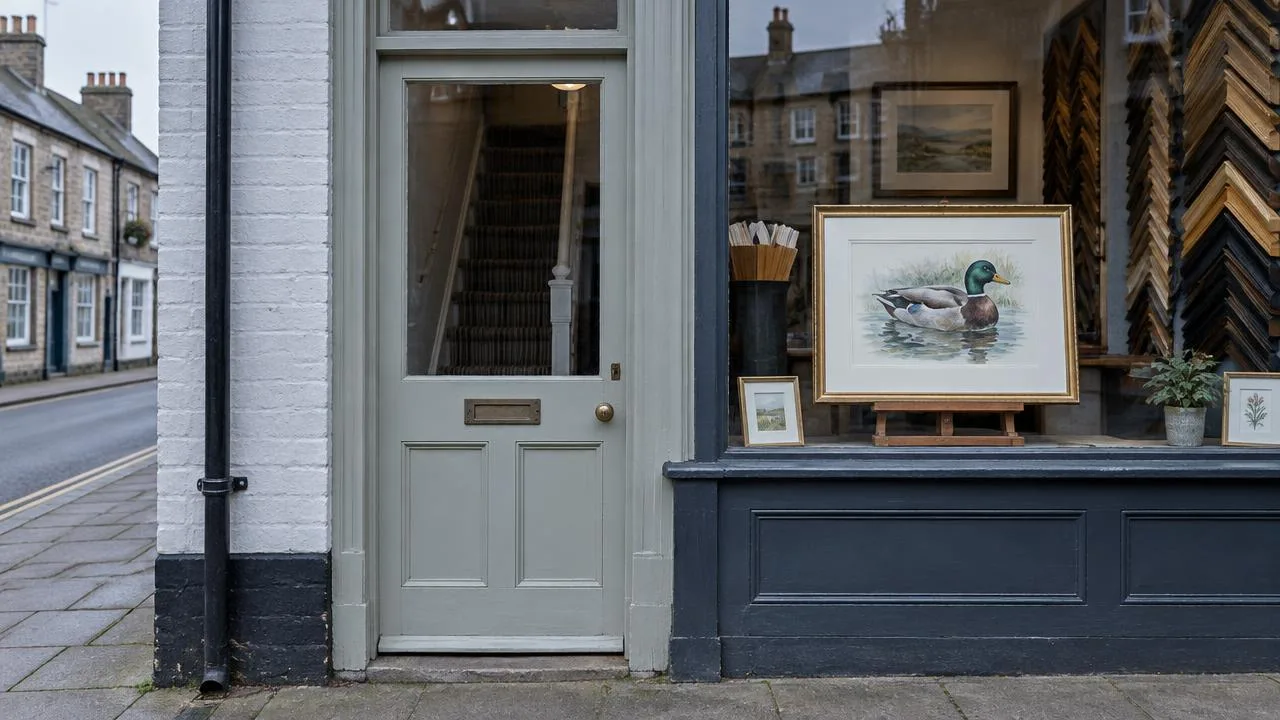
Put your map, directions, parking and access details on the contact page. Be specific about stairs, lifts and the route to the room. If your premises genuinely present a barrier, say so while the visitor still has choices. Moira’s building has a flight of stairs and no lift. Someone who would find that difficult can see immediately that she also offers video appointments.
Choose two or three details that matter to your particular clients and make them visible early on. For Moira, being near the bus station is one. For another homeopath it might be evening availability, consultations in a second language or a ground-floor room. A fern is welcome in the photograph, provided it can give reasonably accurate directions.
5. How do I book or ask a question first?
Pat is ready to try the website again. This time she can open it on her phone, see the prices and reach the live calendar from any page. The button says Book a consultation. Just above the paid appointments sits the free introductory call, with a short note explaining who will ring whom.
Keep another route open for the person who has one question left. Give a business email, mobile number and a short contact form that asks for a name, a way to reply and a message. Say when you’ll respond. Someone asking whether their partner can accompany them shouldn’t have to supply a medical history first.
Before launch, give your own Pat the same £80 and Tuesday-afternoon brief. Use a phone on mobile data. Can they tell you what they’d pay, find an available appointment and identify the right door? Ask what, if anything, they’d still have to ring you to find out. Their answer is the next edit.
A fortnight later Moira receives an email from her first visitor to use the new site. “I’ve booked for Tuesday. Your directions were easy to follow, thank you. Is the duck for sale?”
Moira forwards that one downstairs.
Before putting more time or money into attracting homeopathy patients, check that your fees and the number of paid appointments you need add up. Do the maths for your practice.
Once homeopathy patients find you, what happens before, during and after their appointment matters too. Give great service in your practice.
Where to go next
The same principle in other professions
Ideas often travel well between modalities.
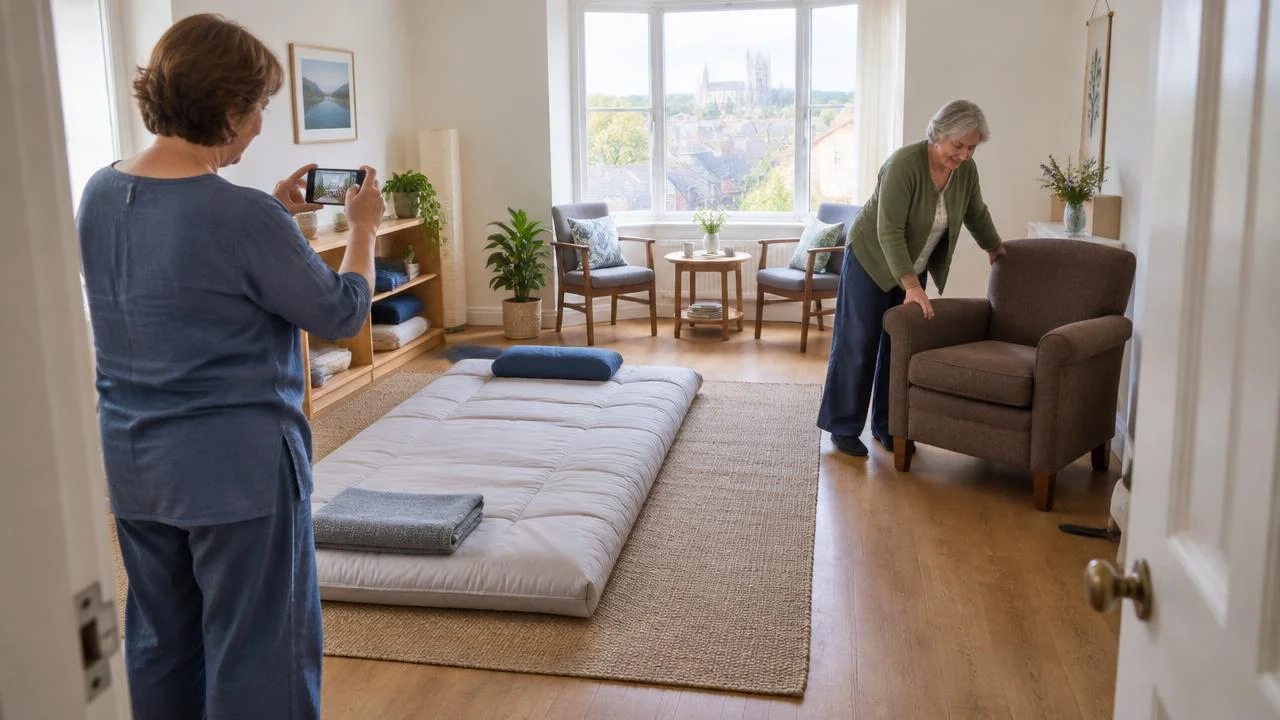
4 Photos Your Shiatsu Website Needs (and What to Write Underneath)
Anna’s friend Val wants the brown chair back in shot. Four photographs and useful captions can answer the questions newcomers hesitate to ask.

5 Ways to Make Your Bowen Therapy Website Work With One Thumb
Tess wants the price of a first appointment. Her whippet has other plans. Five mobile website fixes can help newcomers book with one thumb.

4 Ways to Speed Up Your Mindfulness Website Before Class Starts
Asha needs a time, a door and a chair. Robin’s website offers reeds. Four practical changes can help students find what they need before class starts.

3 Pages Your Craniosacral Therapy Website Actually Needs
June wants to know about trousers, Fridays and fifty pounds. Three useful pages can help your craniosacral therapy website answer the questions that matter.