
How to Build a Nutritional Therapy Website: 5 Ways to Turn Visitors into Clients
Bev wants help with meals around shift work, not blueberry tweezers. Lou’s website needs to make an ordinary week a good enough starting point.
Published by the GROW Formula® team · Updated

Bev is halfway through writing “roasted vegetable medley” in her food diary when her wife looks over her shoulder.
“Was that the chips?”
“There were peas.”
“I’m only asking because I did most of the roasting.”
Bev has been thinking about seeing a nutritional therapist. She works shifts, her wife works different shifts and on alternate Thursdays their kitchen appears to be run by the nine-year-old, whose signature dish is grated cheese eaten from the grater. What Bev wants is help feeding herself on the evenings when all three of them need to be somewhere else.
But the practitioner’s homepage shows a woman arranging blueberries on porridge with tweezers. The booking page mentions a three-day food diary. Bev has decided to start hers on Monday, by which time she intends to have become the sort of woman who owns blueberry tweezers. This is the third Monday she’s picked.
If you’re building a nutritional therapy website, Bev presents an interesting design problem. She already wants your help. Everything blocking the booking is something she thinks she has to do before she deserves it. Here are five changes that could get her through the door with an honest account of the chips.
1. Put a recognisable Tuesday on your homepage
The fictional practitioner Bev has found is called Lou. At appointments, Lou asks good questions. Who does the shopping? Is there a microwave at work? When you say you get half an hour for lunch, how much of that half-hour belongs to the lift?
None of this has made it onto her homepage. Her opening line is “Personalised nutritional therapy for optimal wellbeing”, which could describe Lou equally well in a terraced house in Gloucester or aboard an exceptionally well-provisioned yacht.
Lou tries again:
Nutritional therapy for people working shifts, in Gloucester and online If your rota keeps changing, you may have plenty of ideas for what to eat and very few chances to eat it. I’m Lou. I help people work out how to shop, cook and plan meals around the week they actually have. Bring your rota if you like. It’s often a useful place to start.
Choose a situation you know well from your own work and describe it in language your clients would use. Then name one or two ways you make the appointment practical for them. In Lou’s case, evening video appointments and plans built around an agreed shopping budget matter rather more than the word bespoke. Give these details room beside a recent photo of yourself. A visitor who’s been given your name by a friend can see straight away that they’ve found the right person.
2. Explain the food diary before anyone starts revising for it
Once a form feels like a test, people start looking for the correct answers. Bev’s peas have already earned a promotion. By Friday a perfectly ordinary jacket potato could have a LinkedIn profile.
If you use a food diary, put a short explanation on your First appointment page. Say when you’ll ask for it, how many days you want, roughly how long it takes and what you’ll do with the information. If people can talk you through a typical day instead, say so. Here’s how Lou explains her process:
Once you’ve booked, I’ll send you a simple three-day diary. A few words about what you ate and when are enough. Please include an ordinary workday if you can. We’ll look at the pattern together so I can see where your day makes eating difficult. If writing things down is uncomfortable or impractical, let me know and we’ll talk it through in the appointment instead.
Make that promise only if it reflects your practice. Then check your paperwork against it. If your website says “a few words” and the attachment asks for the weight of a sandwich to the nearest gram, the sandwich has the final say.
Keep the initial enquiry separate from the consultation paperwork. Someone asking about evening availability should be able to give you their name, a way to reply and their question. Explain when and how you’ll collect a health history after booking, so people know where their personal information goes.
3. Show what “personalised” buys them
Lou’s website promises a personalised nutrition plan. Bev pictures a PDF containing fifteen recipes, each beginning “The night before”. The night before was also quite busy.
Give visitors a small, fictional example of what you actually do. Lou sketches this one for her website:
Imagine you work three late shifts. On two of them you have access to a staff kitchen. On the third you eat during a changeover with ten minutes to spare. In a consultation, we’d look at those days separately. We might pick one meal you already like, work out when you could take it with you and write a short shopping list together. At a follow-up, I’d want to hear what happened on the difficult shift.
That gives Bev something she can picture paying for. It also gives her a better idea of Lou’s manner than six paragraphs about her passion for nourishment. For another practice, the telling detail might be adapting meals around religious observance, sharing the cooking across two households or working with the foods a client can afford at their local shop.
Alongside the example, give your actual qualifications, relevant professional memberships and a link to your register entry where applicable. Be precise about what you offer. Claims to diagnose or treat a medical condition carry a very different evidential burden from a description of your consultation. Check UK advertising guidance when writing service pages, and apply the same standard to claims in any client feedback you publish with permission. CAP guidance on nutritional therapy
4. Price the consultation, then answer “What else might I have to buy?”
Bev has found Lou’s fee. Her next question is whether she can afford to follow the advice. Will there be supplements? Tests? A sort of seed that costs £8 and lives forever in the hinge of the cupboard?
A Fees and appointments page is the place to deal with both budgets: the cost of seeing you and any further spending a client might be asked to consider. Here’s Lou’s illustrative menu:
| Appointment | What’s included | Fee |
|---|---|---|
| Introductory call, 15 minutes | Ask about the service and decide whether it fits | Free |
| First consultation, 75 minutes | Review of your diary and routines, the appointment and a written summary of the changes we agree | £95 |
| Follow-up, 30 minutes | Review what you tried and adapt the plan around what happened | £45 |
Use your own fees and specify what happens between sessions. If a package includes three appointments, give the total price. If tests or supplements feature in your practice, explain whether they’re optional, whether they cost extra and when you’ll discuss that cost. Disclose any financial interest in purchases you recommend. If, like Lou, clients can work with you using ordinary supermarket food and never buy a product through you, put that on the page. Bev has been waiting for somebody to tell her.
5. Make the next step possible in the time it takes the kettle to boil
It’s Thursday. Bev has four minutes before she leaves for work. This is when she remembers Lou. It would be a pity if the website insisted on a desktop computer and a period of uninterrupted reflection, since Bev last had both in 2017.
Keep the site quick to load and easy to read on a phone. Put a plainly labelled booking button on every page that opens your actual availability. If you offer a free introductory call, list it first and explain who rings whom. Beside it, give visitors a way to ask a question by email, mobile or a short form, with a realistic reply time. For in-person sessions, include a map, directions and access information. For online appointments, explain when the joining link arrives.
Now try one test before you publish. Give somebody your homepage on their phone and say, “You work rotating shifts, you’ve got £100, and you haven’t kept a food diary. Can you see Lou?” If they can pick an appointment but still think they have to eat differently for three days first, the bit to fix is the sentence about preparation. The booking button is innocent.
On Thursday afternoon Bev books the call. A week later she opens the diary Lou has sent her. Under Wednesday’s dinner she writes “chips and peas”. Underneath, without being asked, she adds, “Home at 8.40. Wife had ten minutes before she went out. We got to eat together.”
That last sentence gives Lou somewhere useful to begin. Whatever the two of them come up with for Wednesday evenings, Bev would quite like to keep those ten minutes.
Before putting more time or money into attracting nutritional therapy clients, check that your fees and the number of paid appointments you need add up. Do the maths for your practice.
Once nutritional therapy clients find you, what happens before, during and after their appointment matters too. Give great service in your practice.
Where to go next
The same principle in other professions
Ideas often travel well between modalities.

5 Reflexology Website Fixes That Turn Vouchers into Visits
Jean’s reflexology voucher has spent four months under a ceramic lemon. Five website fixes could help her take it off the fridge and book.
4 Photos Your Shiatsu Website Needs (and What to Write Underneath)
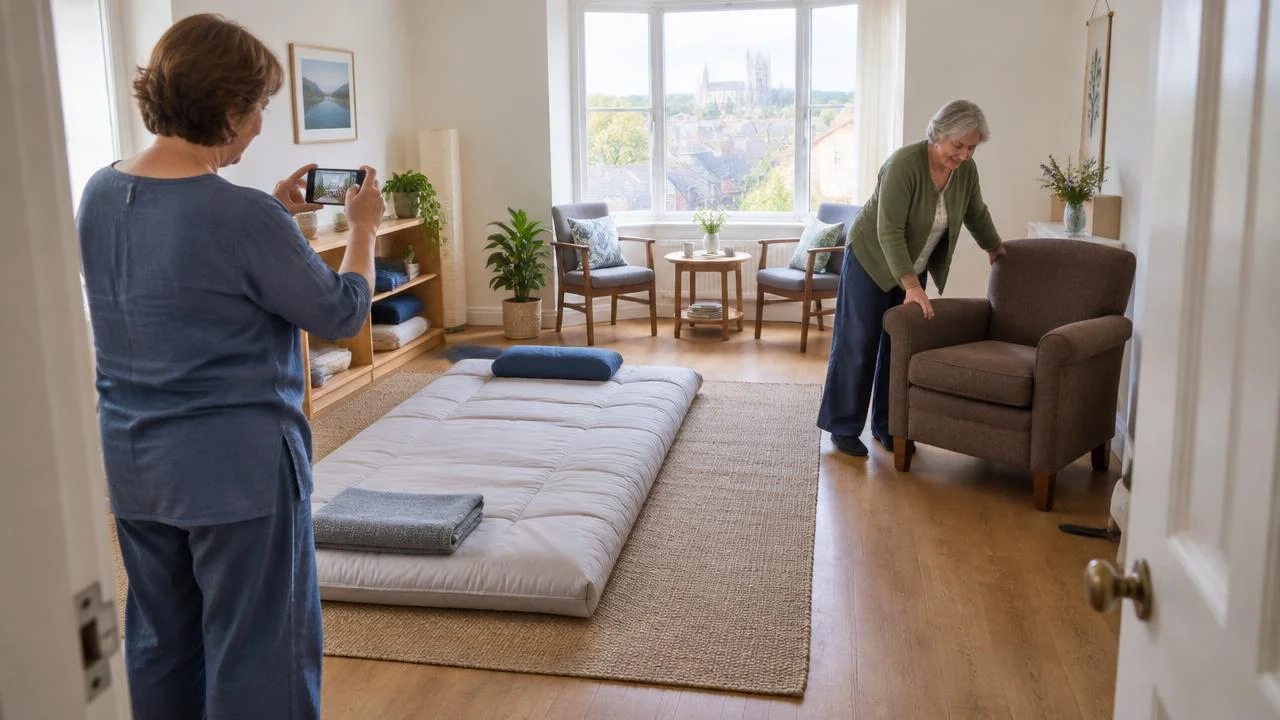
Anna’s friend Val wants the brown chair back in shot. Four photographs and useful captions can answer the questions newcomers hesitate to ask.

5 Ways to Make Your Bowen Therapy Website Work With One Thumb
Tess wants the price of a first appointment. Her whippet has other plans. Five mobile website fixes can help newcomers book with one thumb.

4 Ways to Speed Up Your Mindfulness Website Before Class Starts
Asha needs a time, a door and a chair. Robin’s website offers reeds. Four practical changes can help students find what they need before class starts.