
How to Get Clients as a Personal Trainer: From First Conversation to First Paid Session
There's often a gap between somebody wanting your help and knowing what a first session with you would involve. Here's how to close it without conducting a sales presentation beside a kettlebell.
Published by the GROW Formula® team · Updated
“Could you show me how to lift that?” asks Sue.
Matt looks across the gym. “The kettlebell?”
“My suitcase. I’m taking my granddaughter to York in six weeks. Last time, a man had to put it on the luggage rack for me. Then he got off at Derby. I spent the rest of the journey trying to identify his successor.”
Matt is a personal trainer. This is exactly the sort of thing he helps people work towards. He explains grip strength, bracing and progressive overload. Sue thanks him and goes home knowing three new terms and absolutely nothing about how to become his client.
If you’re wondering how to get clients as a personal trainer, start with the conversations that already end in “Thanks, that’s really helpful.” There’s often a gap between somebody wanting your help and knowing what a first session with you would involve. Here’s how Matt learns to close it without conducting a sales presentation beside a kettlebell.
1. Find a group of people with a reason to train
Matt’s diary is full after six. What he’d like to fill is Tuesday and Thursday mornings. His original plan is to post more videos of himself training at six in the morning. This will probably reach some people who enjoy training at six in the morning, a group whose commitment to six in the morning is, for present purposes, a slight drawback.
Start with the sessions you can sell. Then identify people who can realistically attend them and who share a reason to want your help. Ask three current clients what was happening when they first considered personal training. Listen for a moment you could recognise in somebody else’s life.
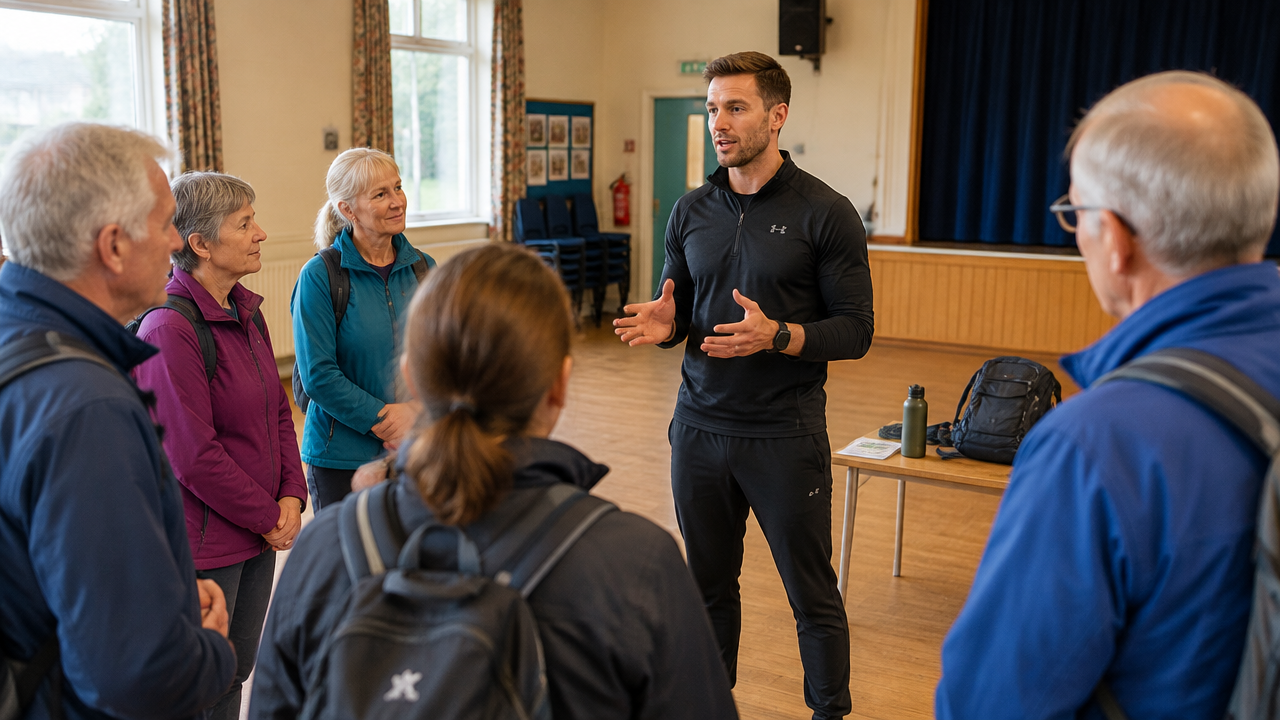
Sue belongs to a local walking group. Some members want to feel stronger carrying a daypack or getting up from a picnic bench. They meet on weekday mornings. Matt asks the organiser whether members would enjoy a short practical talk after their next walk. They settle on Getting up from the pub garden bench when there’s no table handy. The organiser can name the bench.
Your audience might be shift workers, new gym members or runners preparing for their first hill race. Choose somewhere those people already gather. Agree a useful contribution with the organiser. Bring one simple way for interested people to meet you afterwards. That’s the beginning of a campaign you can repeat and measure.
2. Attract attention by demonstrating one thing well
At the walking group, Matt could list all his qualifications and explain his entire approach to strength training. Instead, he asks, “Who picked their seat today based on whether it had arms?” Five hands go up. A sixth member says she chose hers for the cake, which Matt accepts as a separate field of expertise.
He gives the short demonstration the organiser invited him to give. People can watch, ask questions and decide whether they like the way he teaches. At the end he says:
I train people who’d like to feel stronger doing everyday things. If you’ve got something in mind, I offer a free 15-minute visit at the gym. Bring your question, I’ll show you around and we can talk about what we could work on together. Here’s where to see the times.
This is the GROW Formula’s AIDA sequence in practice. The walking group gives Matt an audience’s attention. The question about their chairs earns interest. Seeing how patiently he teaches makes it easier to want his help. The invitation gives people an action they can take. Crucially, the people who only came for the walk still get a decent talk and an uninterrupted crack at the cake.
3. Make the free introduction easy to accept
A vague “Give me a shout sometime” makes the prospective client invent the next step. Should Sue ring? Send a voice note? Catch Matt when he’s halfway through somebody else’s plank?
Make a free Meet your trainer session the first item on your service menu and in your booking calendar. Offer 15 or 30 minutes, ideally in person when you train locally. If you coach online, explain who sends the link and what you’ll do on the call. Alongside it, show the price of paid training. Someone can decide privately whether it’s within reach.
Matt’s listing might read:
Meet Matt at the gym · 15 minutes · Free. I’ll meet you at reception. Come in ordinary clothes and bring one thing you’d like to be able to do more comfortably. We’ll talk it through, have a look around and discuss whether one-to-one training would suit you. Gym membership isn’t required. A paid first session is £55 for an hour, including entry.
Use your real terms. Link straight to that appointment from the host’s event email, your website and any handout you’ve agreed to share. Test the booking on your phone. If Sue scans a code for a free chat and is immediately invited to purchase twelve weeks of Total Body Rebellion, matters have escalated somewhere between the bench and the car park.
4. Let the prospective client do most of the talking
Sue books. When she arrives, Matt is tempted to demonstrate how much he knows. Instead, he asks, “What would you most like to be able to manage by the time you go to York?”
“Getting the case up there myself.”
“What’s the awkward bit?”
“The lift at the end. I can wheel the thing all the way from Bristol. It’s the last eighteen inches that require staff.”

Now he knows what matters to her. He asks what training she’s done before, what she’d feel comfortable trying and when she could realistically come. Then he checks his understanding: “So you’d like to build strength for lifting and carrying, practise with someone first and eventually know what to do on your own. Have I got that right?”
This conversation gives you the material for a relevant offer. Use the person’s words, check whether their goal sits within your scope and explain what you could do in the first paid session. Promise the work you can provide. A six-week deadline is useful information, not a reason to guarantee what Sue will be able to lift by departure day.
5. Offer one paid next step, then give them room to decide
Matt’s old habit was to finish a promising introduction with “Brilliant. Well. Lovely.” It conveyed warmth. It also left Sue responsible for raising the rather delicate possibility of paying the man who does this for a living.
An invitation can be both direct and easy to decline:
From what you’ve said, I think a one-to-one session would be a good place to start. We’d look at how you lift and carry now, try a starting point that suits you and agree what you can practise. It’s £55 for an hour. I’ve got Tuesday at ten or Thursday at eleven. Would you like either, or would you prefer to take the details away?
If they want to book, make it possible there and then. If they want time, ask whether they’d like the details by email. If they’d like a follow-up, agree when. If they say the fee is beyond them, take that answer seriously. An existing small-group option might genuinely suit them. An improvised discount because the final thirty seconds felt awkward is a poor foundation for both people.
Find out where your next client is getting stuck
After a month, trace one campaign from the first conversation to the first paid session. Here’s an illustrative result for Matt’s walking-group talk:
| What Matt records | Result |
|---|---|
| People at the talk | 18 |
| Free introductions booked | 5 |
| Introductions attended | 4 |
| First paid sessions attended | 2 |
| Fees from those first sessions | £110 |
Matt also records preparation, travel and delivery time, including the four free introductions. The £110 is revenue. His time and costs decide whether the campaign was worth repeating. He can add repeat sessions to the figures when they happen.
The numbers also tell him what to investigate. If people chat after the talk but nobody books an introduction, ask whether the invitation, dates and location worked for them. If introductions are booked but poorly attended, check the confirmation and directions. If people attend and leave enthusiastic but never take up a paid slot, listen to how you describe the first session, its price and the decision you’re asking them to make.
On Tuesday at ten, Sue turns up with an empty suitcase. “I thought it might help you see what I mean.”
It does. It’s also the first time Matt has seen anyone enter the gym with adequate luggage for the changing rooms.
He opens the door. “Show me those last eighteen inches.”
Where to go next
The same principle in other professions
Ideas often travel well between modalities.

Physiotherapy Marketing: How to Find Out Where New Patients Come From
When a new patient says “Google”, that may only be the last step. Two questions reveal who really sent them, and where your next marketing pound should go.
Massage Advertising: Where to Advertise and How to Tell What Gets Bookings
Before you spend money on massage advertising, decide which appointments you want to fill, who could realistically attend them and how you'll recognise a booking that came from the advert.